
Franco Nero's net worth is most reliably estimated at $10 million. That figure appears consistently across multiple celebrity finance trackers as of 2025 and 2026, and it lines up reasonably well with what a working actor of his stature, longevity, and international profile would accumulate over a six-decade career spanning more than 200 film and television projects. It is an estimate, not an audited figure, but the consistency across sources makes it the most defensible single-point number available right now.
Franco Nero Net Worth: Estimated Wealth, Income Sources

Marcus Holloway
18 Apr 2026
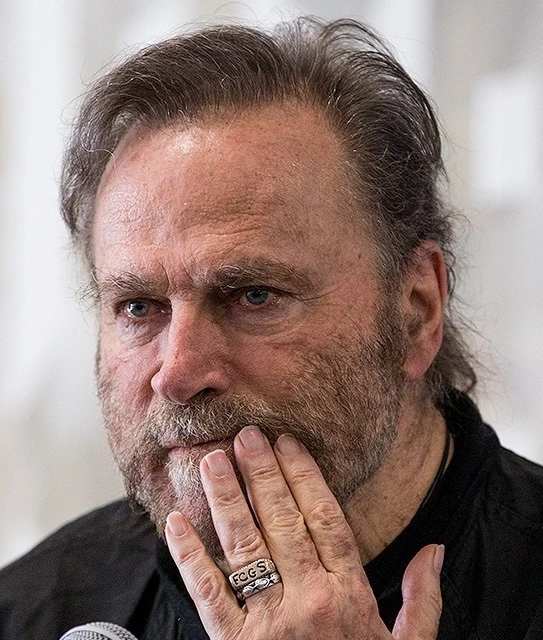
Who Franco Nero actually is (and who he isn't)

Franco Nero is an Italian actor, born Francesco Clemente Giuseppe Sparanero on November 23, 1941. He is best known internationally for his lead role in Sergio Corbucci's Django (1966), a performance so iconic that it shaped the entire spaghetti western genre's visual identity for decades. If you landed on this page wondering whether there is some other famous Franco Nero, a politician, a chef, or a business figure, the answer is almost certainly no. Nero is the dominant public figure attached to that name, and there is no notable namesake likely to confuse the search.
The disambiguation worth flagging is not about other people named Franco Nero, but about the character Django himself. Because Quentin Tarantino's Django Unchained (2012) renewed global interest in the Django mythology, some searches conflate the character's legacy with the original actor. Franco Nero appeared in Django Unchained as a cameo, confirming the connection deliberately, but the wealth conversation here is strictly about the real person, not the fictional gunslinger. For readers browsing other profiles on this site, similar name-based searches like franco de vita net worth or franco valobra net worth point to entirely different individuals in music and business respectively.
The best-supported estimate and what range makes sense
The $10 million figure shows up across Celebrity Net Worth, RichestLifeStyle (updated September 2025), LuxLux, Celebrity-Birthdays, and CelebsMoney's 2026 profile. When multiple independent trackers converge on the same number without one obviously copying the other, that convergence adds a layer of credibility even if none of them can be called definitive. A realistic range, accounting for undisclosed assets, the variability in how real estate and royalties are counted, and the typical imprecision in these estimates, would be $8 million to $15 million. The $10 million midpoint is the most defensible anchor.
To put that in context: $10 million is a solid but not spectacular net worth for someone with Nero's career length. It reflects the reality that most European art-house and genre film actors, even celebrated ones, did not earn Hollywood A-list salaries for the bulk of their careers. Per-film fees in Italian and European productions during the 1960s through 1980s were substantially lower than comparable Hollywood rates. Nero's wealth was built steadily rather than through a handful of massive paydays.
How his wealth was built, phase by phase

Discovery and early career (late 1950s to 1965)
Nero was discovered by director John Huston, which gave him early credibility and access to international productions. His initial years were spent in smaller Italian films, building a reputation rather than a bank account. This phase contributed little in raw financial terms but established the visibility that made Django possible.
The Django breakthrough and peak spaghetti western years (1966 to early 1970s)

Django (1966) was the career-defining moment. The film became a genre landmark, spawning a franchise that extended far beyond Nero's involvement, and it cemented his status as an international lead. Shortly after, he appeared in Camelot (1967), a major Hollywood musical that earned him a Golden Globe nomination. Golden Globes’ official film page for Camelot lists Franco Nero in the cast and includes its Golden Globes recognition in the film’s nomination record Camelot (1967), a major Hollywood musical that earned him a Golden Globe nomination. For a brief window, Nero was operating at a level where Hollywood studios were actively casting him, which would have meant significantly higher fees than his Italian work. This period represents the first meaningful wealth-building phase, though by Hollywood blockbuster standards the amounts were still modest.
International journeyman years and production work (1970s to 1980s)
Through the 1970s and 1980s, Nero maintained a prolific output across European, American, and international co-productions. IMDb credits show him taking on producer and writer roles in addition to acting, including an uncredited co-producer credit on The Shark Hunter (1979). Diversifying into production, even at a modest level, opens income streams that pure acting does not: backend participation, producer fees, and ownership stakes in projects. These are not guaranteed to pay off, but they do represent a smarter long-term play than collecting acting fees alone.
Hollywood re-entry and franchise visibility (1990s to 2010s)
Die Hard 2 (1990) put Nero in front of one of the largest mainstream Hollywood audiences of his career. Franchise films at that scale carry meaningful fees and, crucially, generate residuals for years through home video, cable, and later streaming. His Django Unchained cameo (2012) and appearance in John Wick: Chapter 2 (2017) continued that pattern: high-profile productions with global distribution that keep his name visible and generate ongoing residual income under SAG-AFTRA agreements.
Late-career recognition and the Hollywood Walk of Fame (2026)

On February 12, 2026, Franco Nero received the 2,835th star on the Hollywood Walk of Fame, with the honor framed as a lifetime achievement recognition connected to Filming Italy-Los Angeles. At age 84, Nero is still accumulating professional recognition. The Walk of Fame star does not come with a paycheck, but it signals sustained industry relevance, which keeps royalty conversations alive and supports any licensing or appearance income. Brunel University London also awarded him an Honorary Doctorate (DLitt) in 2011, another marker of the kind of cultural standing that supports long-tail earnings.
Why reported net worth numbers vary and what to trust
Net worth estimates for actors are inherently imprecise for several reasons. First, most of the relevant data is private: acting contracts, residual statements, real estate holdings, and any business equity are not public record unless voluntarily disclosed or revealed through legal proceedings. Second, different trackers use different methodologies. Some extrapolate from known career earnings and apply industry-average savings assumptions. Others work backward from lifestyle signals. Neither is audited. Third, the timeframe matters: a figure updated in September 2025 may not reflect a significant property sale, inheritance, or new production deal completed in 2026.
The specific mechanics of residual income also add complexity. SAG-AFTRA agreements require that actors receive residuals when their work is reused, whether on broadcast, home video, or streaming platforms. However, the streaming era has complicated this: as the debate over Netflix's residuals structure illustrated, streaming residuals can be structured very differently from traditional broadcast residuals, sometimes resulting in meaningfully lower payments than actors expected under older models. For Nero, whose most lucrative residual-generating titles (Django, Die Hard 2, John Wick: Chapter 2) are distributed across multiple platforms and formats, the actual residual income is impossible to calculate from the outside, but it is a real and ongoing component of his wealth.
How to verify the number yourself
Here is a practical checklist for evaluating any Franco Nero net worth claim you encounter:
- Check the date on the estimate. A figure from 2018 is not the same as one updated in 2025 or 2026. Look for a 'last updated' timestamp on any tracker page.
- Cross-reference at least three independent sources. If Celebrity Net Worth, RichestLifeStyle, and one or two others all agree on $10 million, that convergence is meaningful. If one site claims $50 million and the rest say $10 million, treat the outlier with skepticism.
- Map the figure to career milestones. Does the stated net worth make sense given the roles and time periods involved? For Nero, $10 million tracks logically against a career built on European genre films, a handful of Hollywood productions, and decades of residuals rather than franchise ownership or massive backend deals.
- Look for any disclosed real estate or business activity. Sales of significant properties sometimes appear in public records or entertainment press. If Nero sold a major Italian villa or acquired a production company stake, that would meaningfully shift the estimate.
- Check for recent high-profile projects. The John Wick: Chapter 2 appearance (2017) and the 2026 Walk of Fame ceremony are verifiable career events. These don't directly update a net worth figure, but they confirm ongoing activity and income potential.
- Ignore sources that provide no methodology, cite no data, or present wildly divergent numbers without explanation. A net worth claim of $100 million for Franco Nero, for example, would require extraordinary evidence given the available career record.
- Set a reminder to revisit the figure annually. Net worth estimates for living public figures should be treated as a snapshot, not a permanent number.
What Franco Nero's career tells us about how acting actually builds wealth
Franco Nero's financial trajectory is a useful illustration of how acting wealth actually accumulates for most serious actors, as opposed to the outlier superstars. He did not make his fortune through a single massive deal. He built it through volume, longevity, diversification into production, strategic placement in a handful of globally distributed franchise films, and the slow-burn income of residuals from a catalog that spans six decades.
The pattern is common among actors who work consistently without ever quite reaching the $20 million-per-film tier. European genre actors of Nero's era typically earned fees measured in tens or hundreds of thousands of dollars per film rather than millions, which means their net worths reflect accumulated savings and residuals rather than single-event windfalls. The actors who reach $50 million or more in this profession usually do so through equity in productions, backend deals tied to massive box office, or business ventures outside acting entirely.
Residuals are the underappreciated engine here. A film like Django, which has been reissued, referenced, remade, and distributed continuously for 60 years, generates residual payments every time it is licensed. Die Hard 2 and John Wick: Chapter 2 add more recent layers of that same recurring income. Over a lifetime, these amounts compound in a way that is structurally similar to a diversified investment portfolio: not spectacular in any single year, but durable and surprisingly significant over decades.
For comparison, other figures covered on this site, such as musicians like Franco De Vita or entrepreneurs operating in adjacent name-based niches, often show very different wealth-building patterns: heavier reliance on royalties from a narrower catalog, or equity in business ventures rather than film residuals. If you meant franco de vita net worth, that refers to the singer’s finances, which follow a very different mix of touring income and music royalties. Nero's model, a long and prolific acting career supplemented by selective production involvement and high-visibility franchise appearances, is one of the more reliable paths to sustained mid-level wealth in the entertainment industry.
| Career Phase | Key Income Driver | Estimated Contribution to Wealth |
|---|---|---|
| Early career (late 1950s to 1965) | Small Italian film fees | Low; reputation-building phase |
| Django and Camelot era (1966 to early 1970s) | Hollywood and European lead fees, Golden Globe visibility | Moderate; first significant earnings |
| Prolific international period (1970s to 1980s) | High-volume acting fees, producer roles | Moderate to significant; volume-driven accumulation |
| Hollywood franchise appearances (1990s to 2010s) | Die Hard 2, Django Unchained, John Wick: Chapter 2 fees plus residuals | Significant; both upfront and long-tail residual income |
| Late career and legacy (2020s) | Residuals from full catalog, appearance fees, licensing | Ongoing; smaller but durable |
The bottom line: $10 million is the most consistently cited and logically supportable estimate for Franco Nero's net worth as of 2026. It reflects a career built on craft and longevity rather than a single blockbuster payday, and it is best understood as a floor-to-ceiling range of roughly $8 million to $15 million depending on undisclosed assets and the current state of his residual streams. If you want to stay current, check back on major tracker sites after any new high-profile release or significant industry event, and use the verification checklist above to stress-test any claim you find.
FAQ
Is the $10 million franco nero net worth figure likely to be accurate, or could it be off by a lot?
It is best treated as an estimate with a realistic spread. Even when multiple trackers match, the biggest uncertainty is private assets (real estate, business equity) and how residuals are calculated across different streaming and home-video windows, so a shift of several million dollars is plausible.
How much of Franco Nero’s wealth comes from residuals versus acting salaries?
Residuals are likely a meaningful long-tail component because his catalog includes repeatedly licensed and reissued titles, and franchise films generate payouts over many years. But the exact split cannot be verified publicly since residual statements are not typically disclosed and contract terms vary by project and platform.
Do streaming residuals tend to pay less than older broadcast royalties for actors like Nero?
Often they can, depending on the contract and the specific platform’s residual structure. Streaming deals may have different payout formulas and timelines compared with traditional broadcast or physical media, so two projects with similar visibility can produce different residual outcomes.
If a tracker updates franco nero net worth after 2026, what changes should I look for?
Look for concrete career events that can alter payouts, such as a major new reissue, a licensing deal that expands where a title is available, or a new acting or producing contract that changes residual terms. Generic “updated” dates alone usually mean only the tracker refreshed assumptions.
Does the Hollywood Walk of Fame star increase Franco Nero’s net worth directly?
The Walk of Fame is mainly symbolic, it is not typically a compensation event tied to a paycheck. Its financial impact is indirect, it can support more licensing opportunities, appearances, and ongoing recognition, which can matter for longer-term income streams.
Could Franco Nero’s production or writing credits materially change his net worth estimate?
Potentially, but only if those credits included backend participation or ownership stakes that paid off. An uncredited or modest production role may not move the needle much, while a true producer backend deal can create upside beyond standard acting fees.
How can I tell whether a “new” franco nero net worth claim is inflated or just rehashed?
Use the article’s verification checklist approach: check whether the number changed without any career trigger, whether the site provides methodology, and whether multiple independent trackers converge. If the estimate appears suddenly higher with no new releases, it is often an assumption refresh rather than new verified earnings.
Is the term franco nero net worth sometimes confused with the character Django or other unrelated people with the same name?
Yes, search intent can drift toward Django Unchained because it revived the Django mythology, and people may also mix up other individuals named Franco Nero. For wealth questions, focus on the real actor and disregard character-focused content or unrelated namesakes.
What’s the most useful way to interpret a range like $8 million to $15 million?
Treat it as a sensitivity band for private-variable inputs, especially real estate, savings versus spending patterns, and the true magnitude of residuals across platforms. If a tracker presents a single number outside that band without explaining why, the estimate may be less defensible.