
The Daniel Franco most people are searching for is the American fashion designer born November 11, 1971, in Los Angeles, who appeared on Bravo's "Project Runway" in seasons 1 and 2 and later on "All Stars." His estimated net worth today sits in the $500,000 to $2 million range, built primarily through his fashion career, a Nikon sponsorship deal around New York Fashion Week in 2006, entertainment appearances, and his ownership of the Albertson Wedding Chapel in Los Angeles. That range is deliberately wide, because there is no audited public disclosure for a private individual at this income level, and most circulating figures are educated guesses built on the same limited public data.
Daniel Franco Net Worth: Estimate, Sources, and Breakdown

Marcus Holloway
16 May 2026

Which Daniel Franco Are We Talking About?

This is actually the most important question to settle before looking at any number. Wikipedia's disambiguation page for "Daniel Franco" lists multiple public figures with that name, including a Brazilian footballer and an Argentine footballer. If you land on a generic net-worth aggregator page and it lists a figure without specifying which Daniel Franco, there is a real chance the number is attached to the wrong person entirely.
The identifiers that confirm you are looking at the right person: born November 11, 1971, in Los Angeles; appeared on "Project Runway" seasons 1 and 2 on Bravo; later appeared on Bravo's "Top Design"; received a Nikon sponsorship tied to New York Fashion Week in September 2006; and owns (or is closely associated with) the Albertson Wedding Chapel at 834 South La Brea Avenue, Los Angeles. IMDb also carries a biographical profile matching these details. If a source you are reading does not anchor its Daniel Franco to at least one of those identifiers, treat the number with serious skepticism.
It is also worth noting that within this space of Franco-adjacent public figures, there are several people worth comparing or distinguishing: Tom Franco (James Franco's brother, who works in art and acting), and a separate "Daniel Twitch Franco" who has a distinct digital-media profile. Those are different people with different income profiles, so context and identifiers matter enormously.
What 'Net Worth' Actually Means (and Why the Numbers Vary)
Net worth is total assets minus total liabilities. Simple in theory, genuinely difficult in practice for private individuals. For a publicly traded company executive, you can at least look at SEC filings. For a private fashion designer and small-business owner, you are working almost entirely from inference: known income streams, visible assets, and reasonable assumptions about expenses and savings rates.
Forbes, which has the most rigorous celebrity net-worth methodology, deliberately makes its estimates conservative and treats published figures as "at least" minimums. It tracks traced wealth sources and uses a specific reference date, which is why the same person can show a different number on Forbes versus another outlet just because of timing. For Forbes 400 purposes, net worths are calculated as of a single date each year, meaning even a legitimate estimate can look wildly different if markets move or a business deal closes.
For someone like Daniel Franco, who is well below the Forbes 400 threshold, the situation is murkier. Sites like CelebsMoney generate estimates for lesser-known public figures, but they are not conducting independent audits. Many of those numbers are algorithmically derived or pulled from prior aggregator estimates, creating a circular-reporting problem: site A cites site B, which cited site A's earlier figure, and nobody is tracing back to a primary source. Legal experts note that celebrity net-worth estimates typically combine publicly known salary information with inferred visible assets, not audited disclosures.
How We Estimate Daniel Franco's Net Worth

Rather than repeating a number from an aggregator, this estimate is built from identifiable income streams and publicly documented assets. The approach: identify what he does for money, find any available revenue signals for each activity, apply conservative assumptions, and produce a range rather than a single false-precision figure.
The primary sources used here include the documented Nikon sponsorship (2006 press release), Time Out LA's identification of Franco as the owner of Albertson Wedding Chapel with wedding package pricing included, AllBiz's revenue figure for the chapel (listed at approximately $500,000 annually, though this is not an audited statement), LA Weekly's 2015 reporting on the chapel's history and operations, and public records of his television appearances. No single source gives us a bank statement, but together they sketch a credible picture.
Where the Money Comes From
Television and Entertainment
"Project Runway" is a long-running Bravo/NBCUniversal property, and contestants on reality television typically receive modest appearance fees rather than the large salaries associated with scripted acting. NBCUniversal has described “Project Runway” as a long-running Bravo property, providing broader franchise context for tying Daniel Franco’s Bravo appearance to the show’s established identity “Project Runway” is a long-running Bravo/NBCUniversal property.
Estimates for reality TV appearance fees at the early-season "Project Runway" level generally range from a few thousand dollars to around $10,000 per episode for non-winner contestants, though actual figures for seasons 1 and 2 (which aired in 2004 and 2005) were likely on the lower end of that scale. Franco also appeared on Bravo's "Top Design," adding additional (if modest) appearance income. These are one-time or episodic earnings, not recurring revenue.
Sponsorships and Endorsements
The Nikon partnership around New York Fashion Week in September 2006 is the most clearly documented brand association in Franco's career. Nikon was listed as the "title sponsor for Daniel Franco's New York fashion debut," which is a meaningful credential. Sponsorship fees for this type of emerging-designer event partnership are rarely disclosed publicly, and for a designer at Franco's profile level, they typically represent a single deal rather than an ongoing endorsement relationship worth millions. This likely generated tens of thousands of dollars rather than hundreds of thousands, but it does validate that brands saw commercial value in his name at that point.
Fashion Design Business
Franco's fashion design work is the core of his professional identity. Independent fashion designers who do not break into major retail or licensing deals typically generate revenue through private commissions, small collections, and event appearances. Without evidence of a major licensing deal, wholesale retail partnership, or acquisition, this income stream for most designers at his level sits in the range of a comfortable but not extravagant living, rather than a wealth-building engine.
Albertson Wedding Chapel
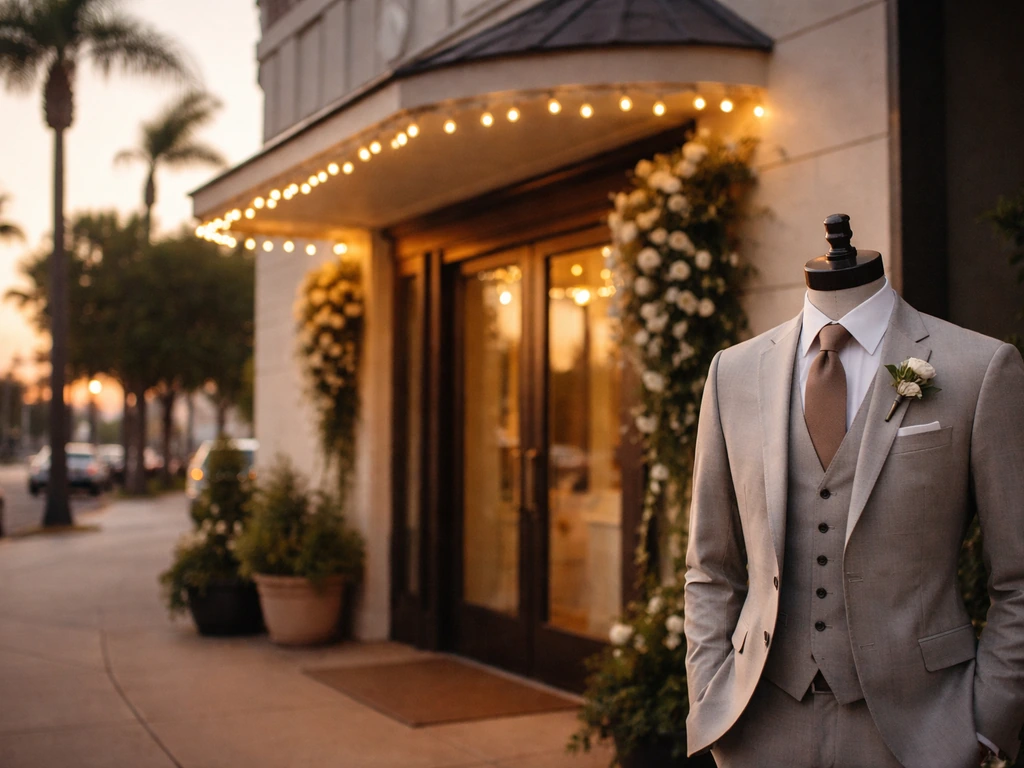
This is the most tangible wealth-building asset documented for Daniel Franco. Time Out LA identifies him as the owner of Albertson Wedding Chapel at 834 South La Brea Avenue in Los Angeles, and AllBiz lists the chapel's revenue at approximately $500,000 annually. That is a third-party estimate and not an audited figure, but it is a concrete signal. Wedding venues in Los Angeles, especially ones with history (LA Weekly reported 30,000 ceremonies performed at the chapel), can command significant per-event fees. If the chapel operates at even a modest profit margin on $500,000 in revenue, it represents Franco's most durable and potentially most valuable financial asset, both as an income source and as a real property holding in Los Angeles.
Wealth-Building Milestones Over Time
| Period | Key Event | Estimated Wealth Impact |
|---|---|---|
| 2004-2005 | Project Runway seasons 1 and 2 (Bravo) | Modest appearance fees; major value was public profile and brand visibility |
| 2006 | Nikon sponsorship at New York Fashion Week debut | One-time sponsorship income; credibility boost for design business |
| 2006-2007 | Bravo's Top Design appearance | Additional appearance fees; extended TV presence |
| 2006-present | Fashion design practice (commissions, collections) | Ongoing but variable income; no major licensing deals publicly documented |
| Pre-2015 to present | Albertson Wedding Chapel ownership/operation | Most significant documented asset; estimated ~$500K annual revenue |
| Ongoing | Real property (chapel building/lease in LA) | Potential property asset appreciation depending on ownership structure |
The arc here is recognizable for many reality TV alumni from the mid-2000s: a burst of visibility and brand opportunity following the show, a window of sponsorship and appearance income, and then a pivot toward a sustainable business rather than continued entertainment stardom. The wedding chapel is the pivot. It is a real operating business with verifiable revenue signals, and in a city like Los Angeles, owning or operating a venue on La Brea Avenue carries both income and real estate value implications.
Net Worth Range and How It Compares
Putting the income streams and assets together: a reasonable, conservative estimate for Daniel Franco's net worth as of 2026 is $500,000 to $2 million. The lower end reflects a scenario where the chapel business carries significant overhead or debt, the fashion practice is modest, and early TV income was largely spent. The upper end reflects stronger chapel profitability, accumulated savings from the sponsorship and TV period, and any equity in the chapel's physical space or brand.
For context, this puts him well below celebrity fashion designers who have broken into licensing or major retail (those figures can reach tens of millions), but comfortably above zero, which is where a surprising number of reality TV contestants end up a decade after their moment. The wedding venue business is the key differentiator: it is a real, operating enterprise with recurring revenue, not just a residual TV profile.
Compared to other Franco-named public figures tracked on this site, the scale is modest. Athletes and entertainers with larger platforms tend to accumulate wealth more rapidly through contracts and royalties. But Franco's path, building a local business with real asset backing after a TV platform, is actually a more stable long-term structure than chasing entertainment income alone.
How to Check Any Net Worth Claim and Spot Bad Estimates

Whether you are reading this article or any other source, here is a practical checklist for judging reliability.
- Check for disambiguation: does the source specify which Daniel Franco it is discussing? If there is no profession, birthdate, or identifying detail, the number may belong to the wrong person entirely.
- Look for primary sources: is the figure traced to documented income (a contract, a press release, a business filing) or is it just repeated from another estimate site? Circular reporting is extremely common in celebrity net worth coverage.
- Check the date: net worth estimates are snapshots. A figure from 2015 is not a 2026 figure. Look for the reference date on any estimate you read.
- Be skeptical of false precision: a number like '$1.4 million' implies a level of accuracy that almost no third-party source can actually achieve for a private individual. Ranges are more honest.
- Verify business claims independently: for Franco, the chapel ownership and revenue figures can be cross-checked via business directories, local press coverage, and venue listings. If a claim can be verified this way, it is more reliable than a raw aggregator estimate.
- Look for methodology disclosure: does the site explain how it arrived at the number? Sites that do not explain their method are almost always repeating a prior estimate without independent research.
- Watch for AI-propagated figures: some net worth numbers now circulate because an AI tool cited an aggregator site and that answer was then indexed and re-cited. This is an extension of circular reporting and is increasingly common.
- Compare across multiple sources: if every source shows the same number, they are probably all sourcing from the same original estimate. Genuine independent research will sometimes produce different figures, and that divergence is actually informative.
The honest summary: Daniel Franco's net worth is not publicly documented to a precise figure, and anyone who tells you otherwise with a single confident number is working from the same limited public data presented here, just without showing their work. The $500,000 to $2 million range is the most defensible estimate given what is publicly verifiable, and the Albertson Wedding Chapel is the asset most worth watching as the clearest signal of his actual financial standing. If you are trying to confirm the Daniel Twitch Franco net worth claim, pay special attention to whether the article clearly matches the right person and asset details like these Albertson Wedding Chapel. If you are specifically trying to compare estimates for Raphael Francois net worth, focus on how closely they tie back to documented income streams and assets rather than recycled aggregator figures.
FAQ
Why do some websites show a very different Daniel Franco net worth from the $500,000 to $2 million range?
Most sites use the same thin public trail (TV appearances, a chapel listing, and occasional sponsorship mentions) and then apply their own assumptions, some of which can double-count the same business value (for example, treating gross revenue as profit or mixing chapel revenue with personal net income). If the page does not tie the Daniel Franco to the LA-born Project Runway seasons 1 and 2 identity and the Albertson Wedding Chapel details, the number may be for a different person with the same name.
Is the Albertson Wedding Chapel revenue of about $500,000 a year the same thing as Daniel Franco’s net worth?
No. Revenue is top-line sales or bookings, net worth depends on profit after expenses, debt, taxes, and reinvestment. A venue can have strong revenue but still produce modest owner income if overhead, staffing, rent or mortgage payments, and seasonality are high.
How should I interpret “net worth” for a private person who owns a business like a wedding chapel?
For private owners, the practical net-worth question is usually owner equity, not business sales. That means you need signals about debt levels, whether the property is owned versus leased, and whether the business is profitable consistently. Without audited statements, estimates usually overemphasize revenue and underemphasize liabilities.
Do early Project Runway and Top Design appearance fees materially change the net worth estimate?
They can move the lower end a bit, but they are usually not the main driver. Reality show appearance income is generally episodic and modest compared with the value of an operating business. The bigger determinant is what the chapel generates over time and how much of that profit becomes retained equity.
Could Daniel Franco’s net worth be higher if the chapel value increased over time?
Yes. Even if annual profit is only moderate, property appreciation and business valuation can raise net worth. Many aggregator estimates miss this and focus only on revenue-like inputs. The more reliable higher-end scenarios typically require both sustained profitability and some form of owned real estate or equity build-up.
What would make the net worth estimate closer to the lower bound, $500,000, versus the upper bound, $2 million?
The lower bound is more likely if there is substantial debt against the chapel property, low profit margins after payroll and marketing, major renovations or operating volatility, or if TV-era earnings were largely spent rather than saved. The upper bound becomes more plausible with stronger margins, consistent year-to-year performance, and retained business equity.
How can I tell whether a “Daniel Franco net worth” article is referring to the right Daniel Franco?
Check that it matches multiple identity anchors together, not just the name. The most useful combination is the Nov 11, 1971 birth date and Los Angeles origin, Project Runway seasons 1 and 2 appearance, the Nikon sponsorship connected to New York Fashion Week in September 2006, and the Albertson Wedding Chapel location on South La Brea Avenue. If even one of these anchors is missing, treat the number as unreliable.
Do net worth estimates include the value of his fashion brand and designs, or only cash and the chapel?
Most estimates heavily weight the chapel because it has clearer third-party revenue signals and is tied to a physical asset. Fashion revenue is harder to quantify unless there are documented licensing, wholesale distribution, or acquisition deals. Without those, fashion income is often treated as modest and not valued like a fully audited company.
If the chapel is listed with estimated revenue online, why is it still called an “estimate” rather than a fact?
Because online business databases and media reports typically infer performance from limited sources, may use historical averages, and usually do not provide audited financial statements. Revenue figures can also be outdated or reflect booking totals rather than collected cash, which affects the accuracy of any net-worth calculation.
What’s the fastest way to verify a “Daniel Franco net worth” claim for accuracy?
Use a two-step check: first, verify the identity match using the Project Runway and chapel ownership details. Second, evaluate whether the source explains how it gets from income signals to net worth, such as distinguishing revenue from profit and discussing likely liabilities like business debt, taxes, and operating costs. A single confident number without that logic is usually just re-packaged inference.
Can net worth figures change depending on the reference date, like Forbes does?
Yes. Even for the same person, a business valuation and market conditions can shift, and owners may take distributions, pay down debt, or invest in renovations. If an estimate claims a value as of a specific year, compare it to the same timeframe, otherwise you might be comparing different financial states.