
François Fillon's net worth is most defensibly estimated in the range of €1 million to €3 million based on his 2017 published wealth declaration and subsequent reporting, though the figure carries real uncertainty because of legal liabilities, an undisclosed loan, and the financial penalties imposed after his 2020 conviction. Interest in Juan Flavier net worth follows a similar pattern, where declared figures and reported obligations determine how reliable any estimate is. His primary disclosed assets at the time of declaration included real estate in the Sarthe, multiple bank accounts, and life insurance policies. What that number does not fully capture are the legal costs, fines, and potential damages that have since eroded whatever net position he held going into the Penelopegate scandal.
François Fillon Net Worth: How Estimates Are Built and Verified

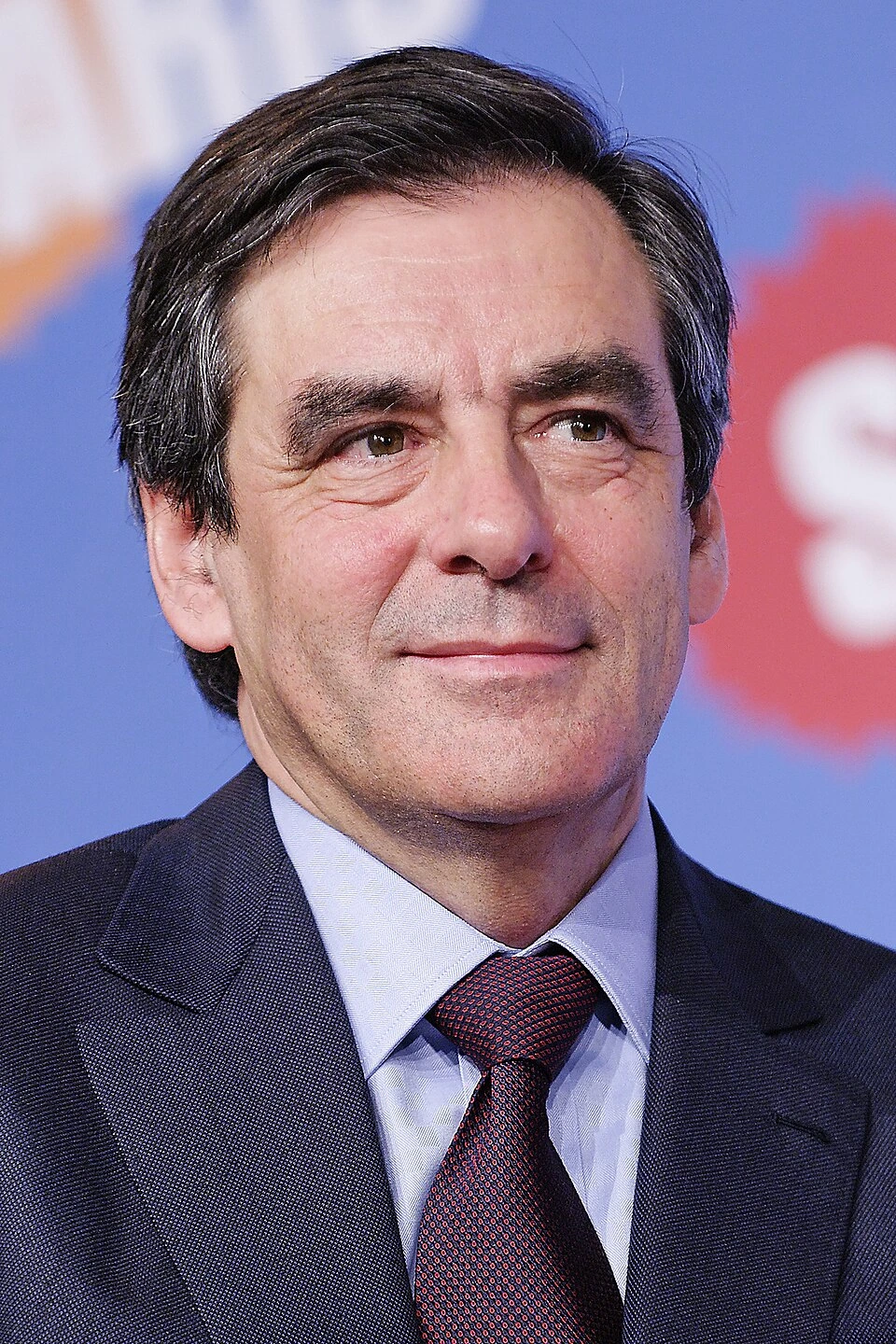
Who François Fillon is and why people search his finances

François Fillon was born on 4 March 1954 in Le Mans, in the Sarthe department of France. He built one of the most prominent political careers of his generation, serving as Prime Minister of France from May 2007 to 2012 under President Nicolas Sarkozy. Before and after that role, he held a long series of parliamentary and ministerial positions stretching back to the 1980s. By 2017 he was the leading center-right candidate in the French presidential race, widely regarded as a frontrunner before the scandal that ultimately defined his public legacy.
The reason people search his net worth is almost always connected to the "Fillon affair," also called Penelopegate. Jean Baptiste de Franssu net worth is often discussed in similar public-finance transparency contexts, though the figures depend on verified disclosures. Investigations revealed that public funds had been used to pay his wife Penelope as a parliamentary assistant over an extended period, with courts eventually finding that the work was largely fictitious. That legal case, which culminated in a 2020 conviction, raised sharp public questions about how much he had accumulated, whether his declared assets were accurate, and what financial liabilities the conviction created. France's transparency framework for public officials makes those questions partially answerable through official declarations, which is exactly why the searches persist.
How net worth estimates are built and why they vary
France is actually one of the better countries in Europe for this kind of research, because it has a formal transparency architecture. The Haute Autorité pour la transparence de la vie publique (HATVP), created by the laws of 11 October 2013, requires public officials to file declarations of their assets and interests. Those declarations are published and can be consulted directly. That gives any serious estimate of Fillon's wealth a real starting point, rather than guesswork.
In practice, however, there are three gaps that make any final number imprecise. First, declared asset values are self-reported and may not reflect current market prices. Second, liabilities like mortgages, loans, and legal penalties are often undisclosed or emerge only through court proceedings. Third, the valuation date matters enormously: Fillon's publicly discussed declaration dates from early 2017, and significant financial events have happened since. Platforms like LesDeputesEnChiffres extract structured data from HATVP's XML files and can give useful aggregate benchmarks, but individual estimates still depend on how completely those declarations were filed and verified.
When you see a round, suspiciously precise figure on a generic celebrity net-worth site, treat it skeptically. The credible range here is built from disclosed real estate values, reported financial accounts, and known legal obligations, not from back-of-envelope salary multiplication. The Bloomberg Billionaires Index approach, which requires transparent methodology and a valuation date for every component, is the standard worth holding any estimate to, and most informal celebrity net-worth estimates fall well short of it.
His income timeline from political career to post-PM work

Fillon's income across his career came from several distinct streams. As a deputy and minister over decades, he drew French government salaries that are modest by private-sector standards but stable and supplemented by parliamentary allowances. As Prime Minister from 2007 to 2012, his compensation was higher, but still in ranges typical of senior French civil service positions rather than anything approaching private-sector executive pay. A French Prime Minister's package, including the official residence and support staff, has significant in-kind value, but that does not convert to wealth accumulation the way an equity grant would.
The more interesting wealth-building period is around the consulting company 2F Conseil, which Fillon created shortly before being elected as a deputy. That company attracted scrutiny from political opponents because consulting fees from outside parties represent a potential income stream on top of political salaries. The precise revenues of 2F Conseil have never been fully disclosed publicly, but the company's existence and its links to outside business interests are part of the documented public record and a legitimate factor in any wealth estimate.
After his exit from active politics following the 2017 scandal, Fillon moved into private business roles, most notably joining the board of Zarubezhneft, a Russian state-controlled oil company, in 2021. That appointment generated its own controversy and was reportedly reversed after the Russian invasion of Ukraine in 2022. Board-level positions at state energy companies typically carry meaningful compensation, so that period represents a potential income stream that is largely absent from his 2017 declaration but relevant to understanding where his finances may have moved post-conviction. If you are specifically trying to estimate Jean-François Formela net worth, you will want to compare any claims against documented income, assets, and verified public records, since estimates can vary widely.
Assets, real estate, and wealth-building connections
The most concrete picture of Fillon's assets comes from the blank" rel="noopener noreferrer">wealth declaration published around February 2017 in connection with his presidential campaign and the transparency pressure of the scandal. Several specifics were widely reported at the time.
- His house in the Sarthe was valued at approximately €750,000 in the declaration context.
- His manor at Beaucé in Solesmes (Sarthe) and rights in other properties were listed, with shared ownership interests noted.
- He held ten bank accounts at Crédit Agricole Anjou Maine.
- Two life insurance policies at the same institution were declared.
- A €50,000 non-interest, non-declared loan from Marc Ladreit de Lacharrière in 2013 emerged separately through the investigation, illustrating that liabilities and informal arrangements do not always appear in official filings.
Real estate in the Sarthe is the most tangible wealth component here. Normandy and Loire Valley manor properties can hold value well but are also illiquid and carry maintenance costs. The ten-account banking arrangement and two life insurance policies suggest a reasonably organized personal finance structure, but the total values of those policies were not publicly confirmed with precision. Without knowing the mortgage positions on the real estate or the cash values of the insurance policies, nailing down a net figure is genuinely difficult.
How the legal case changes the wealth picture

The Penelopegate conviction is central to any honest net-worth discussion, and it affects the picture in three concrete ways: fines, damages, and future earnings capacity. If you are looking for François Marie Banier’s net worth figure, you will want to focus on credible, documented financial sources rather than generic estimates net worth discussion.
On 29 June 2020, the Paris criminal court convicted François Fillon and sentenced him to five years of imprisonment (partly suspended), a €375,000 fine, and a ten-year ban from running for elected office. Separately, TF1 reported that the court found approximately €1.156 million in diverted public funds at the heart of the case. Then, in November 2024, Le Monde reported that Fillon had proposed paying the French National Assembly close to €700,000 in damages related to the affair. That last figure alone, if finalized, represents a liability that would need to be subtracted from any asset-based net-worth estimate.
The combined effect: a €375,000 fine plus potential €700,000 in damages totals over €1 million in legal financial obligations. For the latest discussion of François-Xavier de Mallmann net worth, compare how other reported income streams and liabilities are handled in sources similar to these a €375,000 fine plus potential €700,000 in damages. Stacked against a declared asset base that appeared to be in the low millions, these liabilities are not trivial. They do not necessarily wipe out his net worth, but they substantially compress it and introduce genuine uncertainty about the true net position. Any estimate that ignores these obligations is simply wrong.
The income side is equally affected. The ten-year election ban removes any return to parliamentary or executive compensation. His brief private-sector chapter via Zarubezhneft ended abruptly. That leaves consulting and advisory work as the most likely current income sources, but those are not publicly documented in any detail.
Where Fillon sits relative to other French and European politicians
French politicians are not generally wealthy by the standards of billionaire entertainers or business founders, but they are not poor either. A Le Monde analysis of the Bayrou government found that more than half of the ministers were millionaires based on their published patrimony declarations. If you are comparing net-worth claims across politicians, François Bayrou net worth is often discussed in the same transparency-declaration context as other French public figures Bayrou government. That context is useful: being a millionaire politician in France is common at the ministerial level, not an outlier.
| Politician | Estimated/Declared Wealth Range | Primary Wealth Source | Notable Context |
|---|---|---|---|
| François Fillon | ~€1M–€3M (est., post-liabilities uncertain) | Political salary, real estate, consulting | Conviction-related liabilities reduce net figure |
| François Bayrou | Publicly declared; comparable ministerial range | Political career, farming assets | Longstanding centrist politician |
| Nicolas Sarkozy | Estimated €10M+ | Political career, legal/consulting work, speaking | Higher-profile international profile |
| Typical French minister | Often €1M–€5M per HATVP declarations | Salary, property, investments | Majority are millionaires per Le Monde analysis |
Compared to peers in the broader European political class, Fillon's wealth level (before legal obligations) was solidly middle-tier for a former Prime Minister: meaningful, rooted in property and savings rather than business equity, and substantially smaller than politicians who crossed into private finance, media, or business after office. His case is a useful reminder that political salaries in France, even at the top level, do not generate the kind of wealth that tech founders or investment bankers accumulate. The scandal amplified public interest precisely because the alleged sums, while large in human terms, were relatively modest in the context of high-stakes financial crime.
If you are interested in how other politicians in the broader François/Jean-François name cluster compare, François Bayrou's financial profile offers an interesting parallel as a career centrist politician with declared assets in a similar range. The contrast with figures like Jean-François Formela, who built wealth through venture capital rather than public office, illustrates how dramatically profession shapes the wealth-building path. If you are specifically searching for Jean-François Eap net worth, remember that the same approach of checking declared assets and reported liabilities is what determines how credible any estimate is Jean-François Formela.
How to verify the numbers yourself

The most reliable verification path for anyone who wants to go deeper starts with France's official transparency infrastructure. The HATVP publishes declarations for current and past public officials, and those files are accessible via data.gouv.fr in structured XML format. For historical declarations tied to Fillon's time as a candidate and deputy, the 2017 published declaration covered in Le Point and La Dépêche reporting remains the most cited primary source. Legal sentencing documents from the Paris criminal court (June 2020) and the November 2024 Le Monde reporting on proposed National Assembly damages are the key liability anchors.
- Check HATVP's public consultation portal for any filed declarations under his name.
- Cross-reference the 2017 asset declaration figures (Sarthe property, bank accounts, insurance) against current market values for comparable rural manor properties.
- Subtract confirmed legal liabilities: the €375,000 fine and any finalized damages award to the National Assembly.
- Treat any figure that does not account for those liabilities as an overestimate.
- Use LesDeputesEnChiffres HATVP data extracts to benchmark the result against peer politicians.
- Discard any celebrity net-worth site figure that does not specify a valuation date or acknowledge the legal penalties.
The honest summary: François Fillon's net worth, as best as it can be constructed from public records, likely sits somewhere between €1 million and €3 million before any outstanding damages settlement, and potentially lower once all legal obligations are factored in. He is not a broke man, but he is also far from the wealthy elite by any standard outside politics. The real story of his finances is less about the total number and more about how quickly a promising asset position can be eroded by legal liability, and why transparency declarations matter as a baseline for that kind of accountability. If you are looking for a comparable case, chef Francis Mallmann net worth is often estimated from business earnings, endorsements, and restaurant expansion rather than from public political declarations.
FAQ
Why do net worth numbers for François Fillon often disagree so much?
Because France’s asset declarations are filed at a specific time, a “net worth today” claim is usually an estimate. A careful approach is to treat the 2017 declaration as the starting balance, then adjust for known liabilities (fines, damages proposals) and any clearly documented post-2017 income sources, rather than assume the assets stayed unchanged.
How do asset valuation methods affect François Fillon net worth estimates?
Many published estimates ignore that life insurance and real estate values can be reported as purchase cost, book value, or appraised value rather than the current market price. If a source does not explain the valuation basis for each asset type, its final total is likely overstated or understated.
Should I subtract fines, damages, and other legal costs differently when estimating his net worth?
Legal penalties are not all the same kind of subtraction. A confirmed court fine is a clearer liability than a proposed damages payment that might still be negotiated or partially overturned, so you should distinguish “ordered,” “proposed,” and “not finalized” items when building a net worth range.
What are the biggest pitfalls when relying only on HATVP asset declarations?
Self-reported declarations can include assets held under different names or through complex personal structures, and some liabilities only become visible during court proceedings. If an estimate relies on the declaration alone, it may miss loans, contingent obligations, or costs that emerged later.
Does “diverted public funds” automatically equal François Fillon’s net worth?
No, net worth is not the same as “how much money he took.” The Penelopegate case involved diverted public funds, but a net worth estimate aims to compare total assets minus liabilities at a given time, which may not map one-to-one to the alleged amount.
How much does the valuation date matter for François Fillon net worth?
Yes. The 2017 disclosure reflects one valuation date, but major events after that (court costs, fines, settlement negotiations, and any later income) can compress wealth quickly. If a site claims a single fixed number without a valuation date, treat it as unreliable.
Why can bank accounts and life insurance be hard to convert into a precise net worth figure?
The declaration may show banking accounts and policy existence, but not always the cash surrender value and not necessarily the current balance at the same snapshot date. For a tighter estimate, you would need to separate cash-like balances from policy values and check whether any mortgages or policy loans exist.
How should I handle post-2017 income claims when estimating his finances?
Claims about post-politics compensation are often speculative unless there is documentation such as board compensation reporting, registries, or contemporaneous reporting that specifies amounts. If the source only says “he earned from business roles,” it is usually not enough to update net worth beyond the declaration baseline.
What is a reliable step-by-step way to build a net worth range instead of a single number?
A practical method is to build a range: start with the disclosed asset base, then subtract only liabilities that are confirmed or clearly quantified, and create a second, lower scenario that includes proposed or potential settlements. This avoids over-penalizing the estimate when items are not finalized.