
There is no reliably sourced, publicly verified net worth figure for Franco Corelli. Every number you find online is an unaudited estimate with no traceable connection to probate records, contract disclosures, or estate filings. That is not a dodge: it is the most accurate answer available, and understanding why leads you to a much better picture of his financial life than any single made-up number would.
Franco Corelli Net Worth: Verified Estimates and Sources

Marcus Holloway
4 Jun 2026
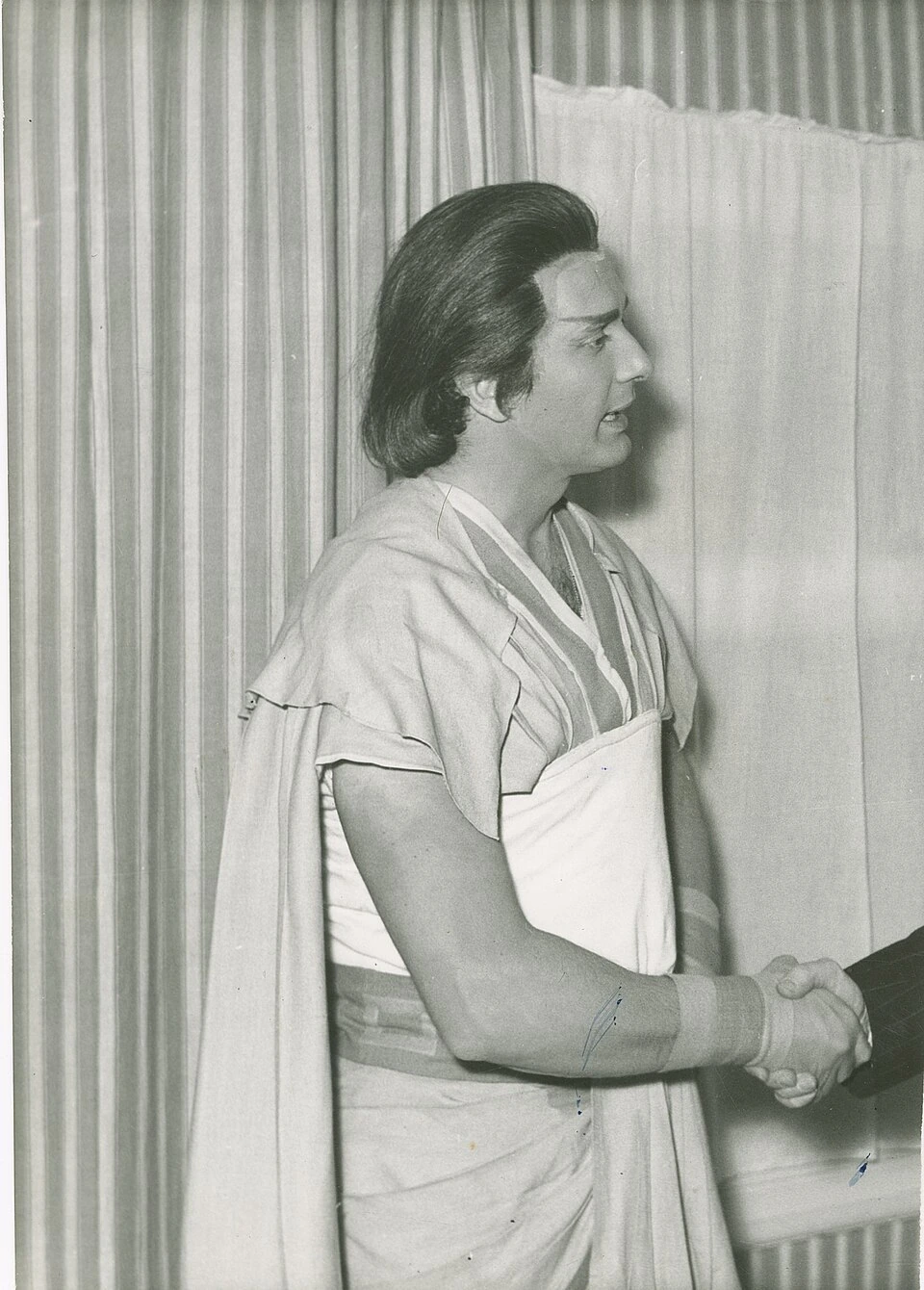
First, make sure you have the right Franco Corelli

The Franco Corelli most people are searching for is the Italian tenor whose full legal name was Dario Franco Corelli, born 8 April 1921 in Ancona, Italy, and died 29 October 2003. He is widely regarded as one of the greatest dramatic tenors of the 20th century, known for a career that ran from 1951 to 1976 and was anchored by a 14-year run at the Metropolitan Opera in New York. If that matches who you are looking for, you are in the right place.
The name confusion risk here is real. A search for 'Corelli' alone returns results for unrelated people including Bruno Corelli, and searches for 'Franco Corelli net worth' frequently surface pages that only mention his name in passing, for example as the namesake of the Franco Corelli Award given to other singers, or as a mentor cited on pages about Andrea Bocelli. None of those pages are estimating Dario Franco Corelli's personal finances. NetworthList highlights that some pages attached to Andrea Bocelli use his name in ways that can mismatch the subject of the net-worth estimate blank" rel="noopener noreferrer">Andrea Bocelli-related pages. Always confirm you are reading about the Italian tenor born in 1921 before trusting any financial figure you see attached to this name.
The best available net worth estimate (and why it comes with caveats)
Credible encyclopedic sources including Wikipedia, the Italian Treccani encyclopedia, and major newspaper obituaries (the Los Angeles Times and The Independent both published obituaries in 2003) focus entirely on Corelli's career and legacy. None of them publish a net worth figure. That absence is itself informative: when authoritative biographical sources skip a number, it typically means no publicly verified figure exists to cite.
The net worth figures that do circulate online for Franco Corelli, typically ranging from around $1 million to $5 million depending on the site, are speculative estimates produced by aggregator websites that apply revenue-modeling formulas to publicly known career data. They are not sourced to estate valuations, tax filings, or primary financial documents. Treat them as rough directional signals, not verified facts. If you need a working figure for research purposes, the middle of that observed online range ($2 to $3 million in approximate late-career or posthumous estate terms) is as defensible as any single number, but it should be labeled as an estimate, not a documented fact.
How net worth gets estimated for historical entertainers

For living celebrities with current business activity, net worth researchers can pull SEC filings, publicized deal terms, property records, and company valuations. For historical entertainers like Corelli, who died in 2003 after a career that peaked in the 1960s and 1970s, the methodology has to work with much thinner material. Here is what goes into those estimates and what gets left out.
What estimators typically include
- Performance fees from major opera houses, estimated from known industry ranges for top-tier tenors of the era
- Recording contracts and studio fees from label associations (Corelli recorded extensively for major classical labels throughout the 1950s and 1960s)
- Possible ongoing royalty streams from recordings still in commercial circulation after retirement
- Teaching income from the post-retirement years when Corelli worked as a voice teacher in New York City (1976 onward)
- Approximate property values if ownership of any real estate was publicly documented
What almost always gets left out

- Actual contract terms: opera singer fees in the 1960s were rarely disclosed publicly
- Investment portfolios or savings held privately
- Estate debts, taxes, or any charitable bequests at death
- Currency conversion adjustments: Corelli earned in multiple currencies (Italian lire, US dollars) across decades with very different purchasing power
- The actual royalty rate and sales volume tied to his recordings
The honest summary is that estimators are working backward from career prestige and general industry knowledge, not from a balance sheet. The result is a plausible range, not a verified number.
Career timeline and the key wealth-building milestones
Even without exact dollar figures, you can map Corelli's likely earning phases pretty clearly from his documented career history. The wealth-building picture divides into three distinct phases.
| Period | Career Phase | Primary Income Source | Wealth-Building Signal |
|---|---|---|---|
| 1951–1960 | Early career, European opera houses | Performance fees at Italian and European venues | Won Maggio Musicale Fiorentino 1951; debut at Spoleto 1951; La Scala debut followed |
| 1961–1975 | Peak international career | Met Opera fees, international touring, major recording contracts | Met debut 27 Jan 1961 as Manrico in Il trovatore; sustained 14-year Met residency is the strongest earnings indicator |
| 1976–2003 | Retirement and teaching | Voice teaching in New York; royalties from back catalog | No major performance income; teaching provided modest supplementary income |
The Metropolitan Opera period is by far the most financially significant. A 14-year relationship with one of the world's highest-profile opera houses, combined with simultaneous international engagements and a prolific recording output, represents the concentrated wealth-building window for Corelli. His retirement in 1976 effectively ended new performance income, which means any estate figure at death in 2003 reflects what accumulated and grew (or didn't) over those peak years, minus 27 years of living expenses.
Why the numbers you find online probably differ from each other
If you check three different net worth sites, you will likely see three different numbers for Franco Corelli. Here is what is actually driving that variation, and none of it has to do with better research.
- Different base assumptions: one site might assume top-tier Met fees for every season; another might use a conservative estimate for a portion of his engagements. Without actual contracts, both are guessing.
- No standardized reference year: one estimate might be presented as a 2003 estate value; another might attempt an inflation-adjusted present-day figure; a third might simply be copying an older estimate without updating it.
- Identity mix-up contamination: pages that conflate Corelli with other people named Corelli, or pages that mention his name only in passing, sometimes get scraped and incorporated into aggregator databases, introducing noise.
- No audit or correction mechanism: unlike public company valuations that get revised when new information is disclosed, celebrity net worth estimates on most aggregator sites never get updated with sourced corrections.
- Speculative royalty assumptions: some estimators heavily weight ongoing recording royalties; others ignore them entirely. For a singer with Corelli's catalog depth, this can swing an estimate significantly.
How to actually verify a Franco Corelli net worth claim

If you see a specific net worth figure for Franco Corelli and want to know whether it is trustworthy, run through this checklist before accepting it. If you are looking for Franco Cozzo net worth specifically, use the same approach and only treat figures supported by primary documentation as credible.
- Confirm identity: does the page confirm the subject is Dario Franco Corelli, Italian tenor, born 8 April 1921, died 29 October 2003? If not, stop.
- Check for a primary source citation: does the site link to or cite a probate record, estate filing, a named biography with verified financial data, or a reputable news article that quotes an estate figure? If it cites only other net worth sites, that is circular sourcing.
- Cross-check the career timeline: does the page's narrative align with verified facts? The Met debut date of 27 January 1961 and retirement in 1976 are concrete anchors you can verify against Metropolitan Opera historical records. If the page gets those wrong, the financial claims are even less reliable.
- Look for a reference year: a meaningful net worth figure must be tied to a specific point in time. Late-career (pre-1976), at retirement, at death (2003), or a present-day estimate are all different numbers. Vague 'current net worth' framing for a person who died in 2003 is a red flag.
- Check the Treccani encyclopedia entry (in Italian): it is the most authoritative biographical source for Italian public figures and is worth scanning to confirm biographical facts even if it does not publish financial data.
- Search newspaper archives: the Los Angeles Times and The Independent both published obituaries in 2003. Neither is likely to contain a net worth figure, but they will confirm biographical details that let you evaluate whether a financial source is describing the right person.
How Corelli's financial picture compares to other opera singers
Classical singers as a group represent an interesting edge case in the wealth accumulation landscape. Compared to pop or rock musicians, opera singers during Corelli's era had limited recorded-music revenue (album sales volumes were a fraction of mainstream pop) and no touring merchandise income. Their wealth came almost entirely from performance fees and, for top-tier artists, recording contracts with major classical labels. That income was real and substantial at the top of the pyramid, but it was also concentrated in a relatively short peak earning window, typically the years between a singer's late 20s and mid-50s.
Corelli sat firmly at the top of that pyramid during his peak years. He was one of the most celebrated dramatic tenors in the world alongside contemporaries like Carlo Bergonzi and Jon Vickers. That prestige level commanded premium fees. But the absence of equity stakes, business ventures, or scalable revenue streams means the wealth ceiling for even the most famous classical singers of that era was considerably lower than what a comparably famous film star or pop musician of the same period might accumulate. A figure in the low single-digit millions is consistent with what you would expect from a very successful but traditionally compensated classical career of that era.
For context within this site's catalog, the wealth patterns for performers like Franco Columbu (who combined athletic fame with business ventures) or Franco Cristaldi (who worked on the production and investment side of entertainment) look meaningfully different from a pure performance-fee career like Corelli's. Opera performance is a high-prestige, relatively low-equity model of wealth creation, which is why even a singer of Corelli's stature does not surface with the kind of documented, large-scale fortune that business-oriented entertainment figures tend to accumulate.
The bottom line on Franco Corelli's net worth
Franco Corelli built his wealth through one of the most celebrated tenor careers of the 20th century, anchored by a 14-year Metropolitan Opera residency and an extensive recording discography. No verified, publicly sourced net worth figure exists for him in major biographical or archival references. The online estimates you will encounter are speculative aggregator outputs, not documented facts. A low-single-digit million dollar figure is plausible given his career tier, but it cannot be confirmed without access to estate records that are not publicly available. When you see a specific number cited with confidence and no primary source, treat it as an informed guess, not a verified figure, and calibrate accordingly. If you want to understand the Franco Colapinto net worth claims you see online, you’ll need to verify what source, if any, is being used.
FAQ
How can I tell if a Franco Corelli net worth number is just copy-pasted from other sites?
Look for whether the page names any primary documentation (for example, probate totals, estate inventories, or specific contract disclosures). If the number is presented without a paper trail and similar ranges appear on multiple sites, it is typically the same modeled estimate being repeated, not independently verified.
If no net worth is verified, why do some sites sound confident and give exact figures?
Many sites treat a range as if it is a single fact by converting modeled career earnings into a one-number estimate (sometimes after applying a generic savings and investment assumption). Confidence comes from the formula, not from evidence, so you should treat “exact” values as modeled output.
What would count as the closest thing to a verifiable net worth for a deceased artist like Corelli?
The most defensible figure would come from probate-related documentation that lists estate assets and debts, or from estate executor disclosures. For many historical entertainers, those documents are either not public or not indexed online, which is why credible biographical references omit net worth numbers.
Is the “Metropolitan Opera residency” the reason estimates focus on a higher peak amount?
It is a major driver because long residency plus frequent guest appearances and a dense recording period imply a higher concentration of paid engagements during a limited window. However, the remaining years after retirement matter too, since living expenses and inflation can reduce what an estate might have accumulated by 2003.
How should I adjust expectations if the estimate claims income from touring, merchandise, or other modern revenue streams?
Be skeptical. Corelli’s era and classical tenor market were largely performance-fee and recording-contract driven, with limited brand-driven merchandise and fewer scalable revenue channels than modern pop careers. If a net worth claim implicitly assumes modern celebrity revenue mechanics, it is likely overreaching.
Could the “Franco Corelli” net worth results be mixing him up with other people named Corelli?
Yes. Name collisions are common, and some pages discuss him only in passing as an award namesake or as a generic reference. Before using any financial figure, confirm the bio details match the Italian tenor born in 1921 and died in 2003.
What is the best way to use net worth estimates for research without overstating them?
Use ranges, not point estimates. Where you need a single number, pick a midpoint only if you clearly label it as an estimate and note the basis is modeled career earning assumptions rather than documented asset totals.
Do recording contracts and royalties make a big difference to the final estate picture?
They can, but the size depends on contract terms and how royalties were structured for classical catalogs at the time. Without access to contract archives or estate records, you can’t quantify the royalty contribution precisely, which is one reason estimates often vary widely across sites.
If I want the most credible alternative to net worth, what should I look at instead?
Track verifiable signals like major engagement history, recording output, and documented appointment length at major institutions (like a long Met relationship). These don’t equal net worth, but they give a defensible basis for understanding earning capacity and career earnings phases.
Where do the big variations between $1 million and $5 million type ranges usually come from?
Most differences come from assumptions about how much of gross earnings converted into savings, how investment returns were modeled over decades, and what percentage of later-life income (if any) is included. When those assumptions are not disclosed, the spread is mainly modeling variability.