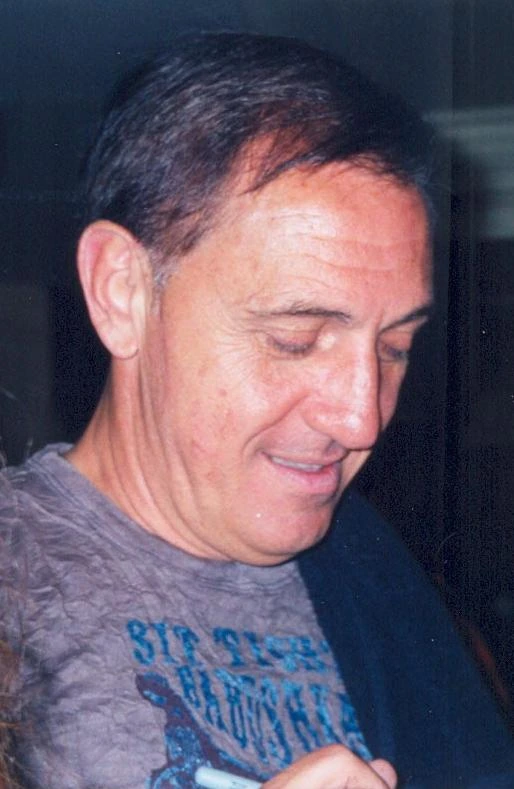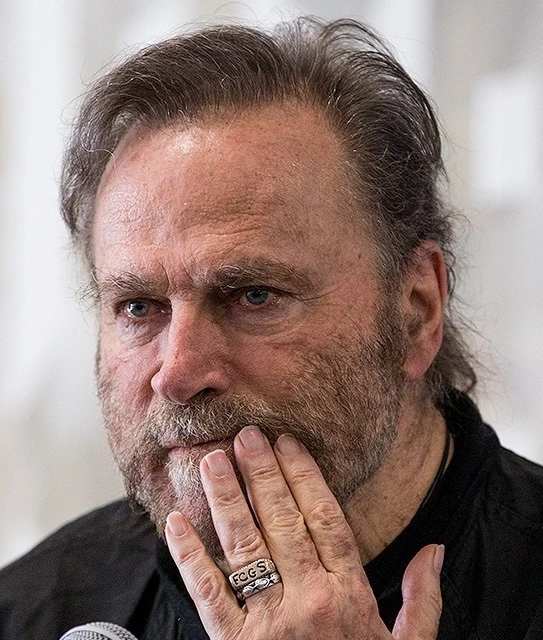
Franco Vescovi is a Southern California tattoo entrepreneur, founder of Vatican Studios and creator of Bishop Rotary Tattoo Supply, with an estimated net worth in the range of $1 million to $3 million as of 2026. That range is based on the combined value of his operating studio businesses, product brand equity, and over two decades of career earnings as a working artist and business owner. No verified public filing exists that pins down an exact number, so treat this as a well-reasoned estimate rather than a confirmed figure.
Franco Vescovi Net Worth: Estimate, Sources, and Breakdown
Marcus Holloway
20 May 2026

Which Franco Vescovi does this search usually mean?
There are two publicly documented people named Franco Vescovi. The first is blank" rel="noopener noreferrer">an Italian boxer (born January 28, 1930, died February 19, 2006) who competed in the welterweight division at the 1952 Summer Olympics in Helsinki. He's a historical sports figure with no living financial footprint relevant to a current net worth search. Wikipedia's Franco Vescovi entry also emphasizes that there are blank" rel="noopener noreferrer">multiple people with this name, so net worth research should disambiguate carefully before relying on any figure. The second is the Southern California tattoo artist and entrepreneur who operates Vatican Studios in Lake Forest, CA, runs a second location through Hollywood Vatican in West Hollywood, and founded Bishop Rotary Tattoo Supply around 2008. When someone searches 'Franco Vescovi net worth' in 2026, they're almost certainly looking for the tattoo entrepreneur. Multiple independent media sources, including Tattoo Life, Inked Magazine, and Lowrider Arte, consistently identify the California-based artist as the prominent living figure under this name. The Italian boxer is a disambiguation footnote, not a likely search target.
How net worth is calculated and why the numbers vary
Net worth is simply assets minus liabilities. For a public celebrity or entertainer, you can sometimes anchor that number with known salary figures, property records, and deal disclosures. For a tattoo entrepreneur like Franco Vescovi, it's messier. His wealth sits primarily in business equity (the studios and Bishop Rotary Tattoo Supply), ongoing service revenue from client sessions, product sales and margins, and any intellectual property value from trademark filings like the Impact Rotary mark on record with the USPTO. None of those categories come with publicly reported dollar amounts.
That's why you'll see wildly different numbers on celebrity net worth aggregator sites. Some sites pull figures from thin air or copy each other without sourcing. Others base estimates on profession-wide averages (a tattoo studio owner in SoCal might reasonably clear $150,000 to $400,000 in annual income depending on session volume and business margins) and then multiply by rough business valuation multiples. Without a personal financial disclosure, bankruptcy filing, or verified business sale, no one outside his accountant knows the real number. Any site that gives you a precise figure like '$2.5 million' without citing a source should be read skeptically.
Franco Vescovi net worth: current estimate and what's driving it

The $1 million to $3 million estimate reflects three concrete wealth drivers: studio business equity, product brand equity, and long-tenure artist earnings. Vatican Studios operates at a minimum of two Southern California locations (Lake Forest and West Hollywood). A multi-location tattoo studio with established clientele, apprenticeship programs, and named artists on staff is a real operating business, not a solo freelancer. Studios of that profile in major metro markets can carry enterprise values in the several-hundred-thousand to low-seven-figure range depending on revenue, lease terms, and ownership structure.
Bishop Rotary Tattoo Supply is the second major asset. Founded around 2008, Bishop produces rotary tattoo machines and related equipment. Vescovi holds at least one registered trademark (Impact Rotary) and has brand collaborations on record, including a Mister Cartoon limited edition machine and product work related to Da Vinci cartridges. A specialty tattoo supply brand with active trademark protection and celebrity-artist collaborations carries meaningful IP value on top of product revenue. Inked Magazine has called Vescovi 'iconic' in the tattoo world, and mainstream brand visibility like the Indian Motorcycle Ink feature translates directly into premium clientele and licensing opportunities.
The lower end of the range ($1 million) accounts for the fact that some of his business locations involve co-ownership or partnership arrangements. Hollywood Vatican involves at least one co-owner, and the Lake Forest location's equity structure isn't fully public. Co-ownership splits the asset value on paper, even if Vescovi is the operational driver. The upper end ($3 million) reflects the combined scenario where studio equity, product brand value, and accumulated personal savings all land favorably.
Career timeline and wealth-building milestones
Vescovi's wealth-building follows a familiar entrepreneur-artist pattern: build a reputation through craft, then leverage that reputation into business ownership and product creation. Here's how the timeline maps out based on documented coverage.
- Early 2000s and before: Vescovi develops his reputation as a Southern California black and grey tattooer. He accumulates roughly 20-plus years of industry experience that underpins every subsequent business move.
- Pre-2008 (documented by 2008): Co-founds O.C. Inkhouse with Sean Rennels in Orange County. This is his first documented studio ownership, establishing an early asset base and business-operating track record.
- 2008: Founds Bishop Rotary Tattoo Supply. This is the pivotal wealth-diversification moment, moving him from purely service-income (tattooing sessions) to product revenue and brand equity.
- 2013: Vatican Studios grand opening, documented by Lowrider Arte. The studio launch marks a formal new chapter for his flagship brand, separate from earlier partnerships.
- 2008 to present: Bishop grows its product line, secures trademark registrations (Impact Rotary on file with USPTO), and enters brand collaborations with artists like Mister Cartoon and products like Da Vinci cartridges.
- January 2026: Tattoo Life publishes a profile at the Lake Forest location, confirming active ongoing operations and positioning Vescovi as a current industry figure, not a retired one.
That arc spans roughly 18-plus years of documented studio and product business activity, which is a meaningful compounding period for a business owner even in a niche industry. Apprentices he mentored (including Alexis Vaatete, who later managed Vatican Studios) and other staff like Latisha Wood (who began as an apprentice and became a studio cornerstone) signal that Vatican Studios has real operational depth, not just a name on a door.
Where to verify the claim: sources worth checking

If you want to pressure-test any Franco Vescovi net worth figure you find online, these are the most reliable sources to consult. For a deeper look at bruno francois net worth, compare how these different sources document assets, income, and any verifiable transactions Franco Vescovi net worth.
- USPTO TTABVUE: The Impact Rotary trademark filing tied to Vescovi is publicly accessible and confirms real IP activity. Trademark filings don't tell you revenue, but they confirm brand ownership and business activity.
- California Secretary of State business entity search: If Vatican Studios or Bishop Rotary Tattoo Supply are registered as California LLCs or corporations, this registry will show formation dates, registered agents, and any status changes.
- Tattoo Life (January 2026 profile): One of the most current and credible industry-press sources confirming business operations as of early 2026.
- Sullen Clothing artist bio: Names him CEO and owner of Vatican Studios and ties his Bishop Rotary founding to 2008. Useful for timeline corroboration, though it's a marketing-adjacent source.
- Inked Magazine and Lowrider Arte (MotorTrend): Both are established publications with editorial standards that have covered Vescovi in feature context, providing independent identity confirmation and business context.
- Inkeeze artist profile: States he 'created Bishop Tattoo Supply' over a decade ago, providing a secondary corroboration of the founding timeline.
- Hollywood Vatican official site: Lists the West Hollywood location with business hours and appointment details, confirming multi-location operations.
What you will not find is a personal income tax filing, a business revenue disclosure, or a verified wealth statement from Vescovi himself. That's normal for a private business owner in a service industry. It does mean that any specific dollar figure you encounter on a celebrity net worth aggregator site should be treated as an estimate unless it cites one of the above primary sources. If you came here specifically for Franco Nero net worth, the same sourcing logic applies because those numbers are often extrapolated without direct financial disclosures celebrity net worth aggregator sites.
How he compares to peers in tattoo and creative industries
The tattoo industry doesn't produce many publicly disclosed fortunes, which makes peer comparison harder than it is for, say, film actors or professional athletes. That said, there are useful reference points. Top-tier tattoo artists in major US cities who own studios and operate product lines typically fall in the $1 million to $10 million net worth range, with the upper end reserved for those who've crossed over into TV (think reality tattoo competition shows) or major apparel/licensing deals. Vescovi has strong brand credibility and industry longevity but hasn't had a reality TV breakout or a mass-market licensing deal that would push him into the high end of that range.
| Profile | Typical Net Worth Range | Primary Wealth Driver |
|---|---|---|
| Top-tier tattoo artist, no business ownership | $200K–$600K | Session fees, commissions |
| Tattoo studio owner, single location | $300K–$1.5M | Business equity, session revenue |
| Studio owner + product brand (Vescovi's profile) | $1M–$3M | Multi-location equity, supply brand, IP |
| TV-crossover tattoo personality (e.g., Kat Von D) | $5M–$15M+ | Media, licensing, mass-market brand deals |
Vescovi's profile sits comfortably in the third tier of that table. He's built a genuine multi-asset business, not just a personal services practice, and his 20-plus years of industry presence give him the kind of compounded credibility that translates to premium pricing and long-term client loyalty. What keeps his estimated ceiling lower than a TV personality isn't talent but distribution: his revenue is tied to physical studio locations and specialty supply sales, not mass licensing or royalty streams.
For context, the site also covers figures like Franco Nero (the Italian actor whose career spans Hollywood films and European cinema) and Franco de Vita (the Venezuelan pop musician with decades of album sales). If you are specifically looking for Franco de Vita net worth, the same issue applies: public data is limited, so estimates should be treated cautiously. Both represent entertainment-industry wealth drivers that are much more easily verified through box office data or album certifications. Vescovi's business-owner model is closer to an entrepreneur like Franco Valobra, where the wealth story is rooted in brand-building and business equity rather than public performance earnings. If you are also researching Franco Valobra net worth, the same idea applies: look for publicly documented businesses and income signals rather than unsourced aggregator claims closer to an entrepreneur like Franco Valobra.
How confident should you be in this estimate, and what to check next
Confidence level on the $1 million to $3 million range: low-to-medium. That's not a knock on Vescovi's success; it's just an honest reflection of what's publicly verifiable for a private business owner in a non-publicly traded industry. The business footprint (two studio locations, a supply brand with trademark filings, 18-plus years of documented ownership, industry media coverage) clearly supports a seven-figure net worth estimate. The exact position within or beyond that range depends on equity structures, debt obligations, and personal finances that aren't public.
If you're trying to nail down a more precise figure, here are the most productive next steps.
- Search California's business entity registry for Vatican Studios and Bishop Rotary Tattoo Supply to confirm active registration status and ownership structure.
- Search the USPTO trademark database for all marks filed under Franco Vescovi's name or assigned to his business entities to map the full IP portfolio.
- Look for any interviews where Vescovi discusses business growth, revenue milestones, or expansion plans. Tattoo Life and Inked Magazine are the most likely venues for that kind of candid business commentary.
- Check if Bishop Rotary Tattoo Supply has a significant e-commerce presence and estimate product revenue from third-party traffic analysis tools (like SimilarWeb or ecommanalyze, which has already indexed Bishop Tattoo Supply).
- Be skeptical of any site that lists a precise net worth figure without sourcing. As of 2026, no verified financial disclosure for Franco Vescovi (the tattoo entrepreneur) is publicly available.
The bottom line: Franco Vescovi is a real, active, and accomplished tattoo entrepreneur whose wealth is grounded in two decades of business building in Southern California. The $1 million to $3 million estimate is reasonable and well-supported by his public business footprint. It's just not confirmed by the kind of hard financial data that would let anyone call it exact. If a source tells you otherwise with a precise number and no methodology, they're guessing too.
FAQ
How can I tell whether a “Franco Vescovi net worth” number is reliable or just copied from other sites?
Check whether the page explains its methodology (assets, liabilities, or business valuation basis) and whether it cites at least one primary signal like a documented trademark record, a business entity filing, or a verifiable transaction. If it gives a precise figure without any sourcing trail or method, treat it as an unsourced guess.
Why is “net worth” harder to pin down for a tattoo studio owner than for a celebrity actor?
Studio owners often hold value in private business equity, equipment, and working capital rather than publicly reported salaries. Many key inputs, like owner distributions, partner splits, and studio debt, are not consistently disclosed, so estimates can swing significantly.
Would co-ownership of Hollywood Vatican likely lower Franco Vescovi’s personal net worth even if the studios are successful?
Yes, it can. Co-ownership typically means Vescovi may control operations but not own a proportional share of equity. That reduces the personal asset value component, even when the studio’s enterprise revenue looks strong.
What parts of Bishop Rotary Tattoo Supply and the Impact Rotary trademark are most likely to affect the valuation?
The biggest valuation drivers are often the brand’s ability to generate repeat wholesale and retail sales, the strength and continuity of trademark protection, and evidence of distribution relationships or royalties from collaborations. Without public revenue numbers, many estimates over or under-weight the IP portion.
If Vescovi makes most of his income from tattoo sessions, does that automatically mean his net worth should be higher than a supply brand owner?
Not automatically. Session-heavy income can show strong cash flow but may translate into lower net worth if margins are squeezed by rent, payroll, equipment costs, or if earnings are mostly reinvested into the business. A supply brand can increase net worth through brand margin, inventory turns, and recurring sales, but it also carries working-capital risk.
How do debts and lease terms change the “$1 million to $3 million” estimate?
Net worth is assets minus liabilities. If leases are expensive or if there is significant equipment financing, the same revenue footprint can produce a lower personal net worth. Conversely, favorable lease terms and low-interest debt can make the higher end of the range more plausible.
What would be a “red flag” that someone is confusing the tattoo entrepreneur with the Italian boxer?
The surest mismatch is context. The boxer is a historical Olympic athlete with no active business footprint tied to tattoo studios or rotary tattoo supply products. If a source connects “Franco Vescovi” to studio locations, tattoo equipment brands, or U.S. trademark filings, it’s almost certainly the tattoo entrepreneur.
Can business revenue estimates help me improve the net worth range without knowing his exact personal finances?
Yes, by focusing on equity value rather than gross revenue. A useful approach is to estimate studio enterprise value using typical small-business valuation logic (profitability, location desirability, owner dependency, and balance-sheet leverage) and then adjust for partner ownership and personal debt. This often narrows the range compared with blindly accepting a single aggregator number.
What kind of public records would most likely reveal more about net worth for someone like Vescovi?
Look for verifiable business entity information, ownership structure changes, recorded trademark status details, and any publicly documented major business transactions (asset purchases, sales, or licensing agreements). Personal tax filings and private credit information are usually unavailable, so the best you can do is triangulate from business-level evidence.
Should I use the “$1 million to $3 million” range as a definitive figure for investing or business decisions?
No. Even the article’s estimate is explicitly not confirmed. For decisions, treat it as a broad confidence range and request specific financial proof (audited statements, balance sheet summaries, or credible valuation reports) if you are considering partnerships, purchases, or collaborations.