Frans Indongo's net worth is estimated at approximately $1.3 billion USD, making him one of the wealthiest individuals in Namibia and consistently ranked among the country's top three richest people. That figure comes from the CAPSI Knowledge Hub profile on Indongo and aligns with his decades-long accumulation of business interests across automotive retail, fishing, hunting, property, hospitality, and financial instruments. The Namibian describes Frans ‘Aupa’ Indongo as a business icon and notes his diversification into sectors including fishing, hunting, property, the car industry, hospitality, and investment in financial instruments diversification into automotive retail, fishing, hunting, property, hospitality, and financial instruments. For a businessman who started building his empire in the 1970s and has been the sole owner of the Frans Indongo Group for over 40 years, a billionaire-level estimate is well-supported by the breadth and scale of his verified assets.
Frans Indongo Net Worth: Estimated Range and How It’s Calculated

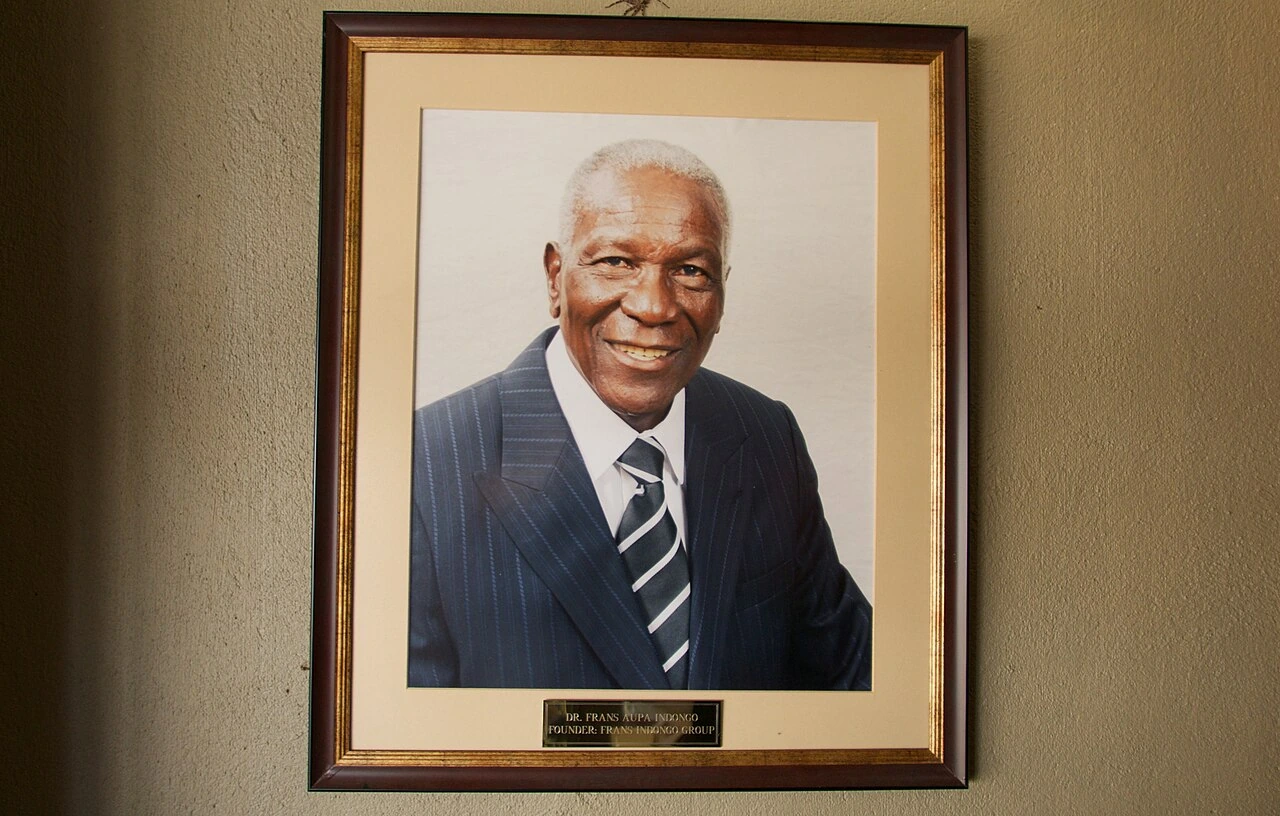
Who exactly is Frans Indongo?

Frans Indongo's full birth name is Fransisco Aupa Indongo, born January 15, 1936, in Namibia. He is widely known by two forms of his name: Frans Indongo (used commercially and in media) and Frans 'Aupa' Indongo (a common journalistic variant). He is a Namibian businessman and former politician, and the founder and sole owner of the Frans Indongo Group, a diversified conglomerate headquartered in Namibia. His business footprint is substantial enough that his name is attached to multiple branded ventures, including Indongo Toyota (one of Namibia's prominent vehicle dealerships) and Frans Indongo Gardens (a hospitality property).
If you arrived here searching for a different 'Frans' or 'Franco,' it is worth clarifying: this is not Franco Harris (the NFL Hall of Fame running back), Franco Loja, Franco Luambo, or Larry Franco. If you meant Larry Franco, that is a different person with a separate background and net worth discussion. Franco Luambo net worth is sometimes discussed online, but his earnings and assets are typically assessed separately from Frans Indongo's business wealth. Those are entirely separate public figures covered elsewhere on this site. Frans Indongo is a Namibian entrepreneurial and political figure, not a sports or entertainment personality, which makes him unusual within the broader 'Franco/Frans/Francisco' name cluster but no less significant in terms of documented wealth.
What 'net worth' actually means here, and why estimates differ
Net worth is the value of everything a person owns (assets) minus everything they owe (liabilities). For a private business owner like Indongo, that means the estimated value of his companies, properties, vehicles, investments, and financial instruments, minus any business debts, loans, or obligations. The tricky part is that Indongo is not a publicly traded company. There is no quarterly earnings report, no SEC filing, no stock price to anchor the math. Every estimate is built from indirect signals: reported business revenues, property records, industry valuations, and credible third-party profiles.
This is why you will see ranges rather than a single definitive number on any reputable net worth reference site. The $1.3 billion figure cited by CAPSI Knowledge Hub is a reasonable anchor, but it reflects a point-in-time snapshot and depends heavily on how you value private businesses. A car dealership empire valued at a revenue multiple today might be worth more or less tomorrow depending on Namibian economic conditions, currency exchange rates (NAD to USD fluctuates), and the health of specific sectors like fishing or hospitality. That is not a reason to dismiss the estimate; it is just honest methodology.
Where the money actually comes from
Indongo's wealth is not built on a single big bet. It is a classic diversified conglomerate model, where revenue streams from multiple industries reinforce each other and reduce overall risk. The Namibian press has described his diversification into at least six distinct sectors, and the Frans Indongo Group's corporate identity reinforces this breadth.
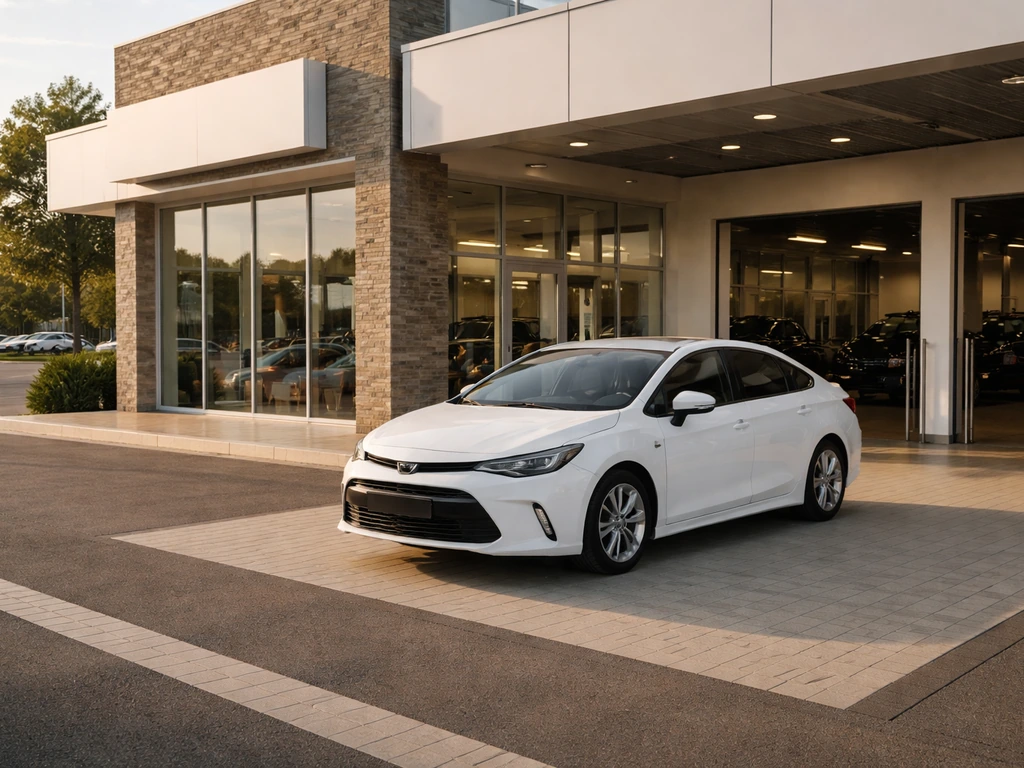
- Automotive retail: Indongo Toyota is one of the most visible branded businesses, sitting in the vehicle dealership sector. Car dealerships in Africa generate revenue through new and used vehicle sales, service and parts, and financing commissions.
- Fishing: Namibia's Atlantic coastline supports a significant commercial fishing industry, and Indongo Group has interests here, giving it exposure to seafood export revenues.
- Hunting and game: Safari and hunting concessions are a premium revenue stream in southern Africa, often involving high-value international clientele and long-term land leases.
- Property and real estate: Frans Indongo Gardens is the most publicly visible property asset, a hospitality venue in Namibia. Commercial and residential property holdings add balance-sheet weight.
- Hospitality: Beyond the Gardens property, broader hospitality interests likely include lodges, accommodation, and tourism-facing businesses.
- Financial instruments: This is the least-publicized income source but often the most quietly significant for ultra-high-net-worth individuals. Investments in equities, bonds, or private equity multiply wealth without requiring active management.
- The Frans Indongo Trust: Mentioned in the CAPSI profile as a vehicle associated with his wealth structure, suggesting formal estate and asset-protection planning is in place.
The political career is worth mentioning for context. Indongo served as a politician in Namibia, and while political roles in Namibia are not typically the direct source of billionaire-level wealth, political networks and policy access can accelerate business licensing, land concessions, and regulatory approvals. His business empire was built in parallel with, not because of, his political work, but the two careers reinforced each other.
Assets, business interests, and other wealth signals
The Frans Indongo Group is the central wealth vehicle. It was founded by Indongo and he has remained the sole owner for over 40 years, which is significant. Many entrepreneurs dilute ownership through private equity rounds, partnerships, or inheritance disputes. The fact that Indongo retained sole ownership through Namibia's independence transition (1990) and decades of post-independence economic development suggests disciplined wealth preservation alongside growth.
Continental Enterprises is another business name associated with Indongo per Wikipedia, pointing to an early corporate vehicle that preceded or runs alongside the broader Group structure. The existence of the Frans Indongo Trust as a named legal entity also signals that formal succession and asset-protection planning is in place, which is a marker of wealth management sophistication typically seen at the nine-figure and above level.
Real property gives the clearest public signal. Frans Indongo Gardens, as a named hospitality property, represents a tangible fixed asset with both operational cash flow (tourism revenues) and underlying land and infrastructure value. In Namibia's property market, prime hospitality real estate near urban or tourist corridors commands significant valuations.
The net worth estimate: range, sources, and confidence level

| Source / Basis | Estimate | Date / Confidence |
|---|---|---|
| CAPSI Knowledge Hub profile | $1.3 billion USD | Most recent available; medium-high confidence |
| Wikipedia ranking (third on Namibia's top 10 richest list) | Consistent with billionaire range | Corroborating signal; no precise figure given |
| Sector-based asset inference (automotive, fishing, property, hospitality, financial instruments) | Consistent with $900M–$1.5B range | Analytical estimate; depends on valuation multiples |
| Frans Indongo Group sole-owner structure (40+ years) | Supports upper end of range | Structural signal; no public financials |
The working estimate for Frans Indongo's net worth as of June 2026 is $1.3 billion USD, with a reasonable range of $900 million to $1.5 billion. The lower bound reflects currency depreciation risk (NAD/USD), potential contraction in hospitality or fishing revenues, and the inherent discount applied to illiquid private assets. The upper bound reflects the possibility that financial instrument holdings or undisclosed property assets push the total higher than publicly visible signals suggest. The $1.3 billion midpoint is the most credible anchor given available evidence.
How his wealth likely grew: a rough timeline
Indongo was born in 1936, which means he began building wealth during the apartheid-era South West Africa period, a difficult environment for Black African entrepreneurs. The fact that he built a business empire during this era makes his story more remarkable, not less. His early corporate vehicle, Continental Enterprises, represents the foundation phase.
- 1960s–1970s (Foundation phase): Early business ventures and political involvement. Building initial capital and networks in a constrained colonial environment.
- 1980s (Consolidation phase): Expanding into automotive retail with Indongo Toyota. Car dealerships are capital-intensive but high-revenue businesses that generate recurring service and parts income.
- 1990 onwards (Post-independence acceleration): Namibian independence opened new opportunities for established Black Namibian entrepreneurs. Land access, fishing quotas, and licensing in sectors like hunting and tourism expanded significantly for previously marginalized business owners.
- 1990s–2000s (Diversification phase): Expansion into fishing, hunting, hospitality, and property. The Frans Indongo Group takes shape as a formal conglomerate with the Frans Indongo Trust as a wealth vehicle.
- 2010s–present (Wealth preservation and growth phase): Financial instrument investments, property appreciation, and continued Group operations compound the existing asset base. Sole ownership maintained throughout.
The pattern here mirrors what you see with other long-tenure African business conglomerate builders: start with one high-cash-flow business (automotive retail fits this perfectly), use those cash flows to diversify into land-backed and resource-backed industries, then layer in financial instruments and formal trust structures as wealth exceeds what operating businesses alone can efficiently absorb. It is a disciplined, decades-long compounding story rather than a single windfall event.
How he compares to peers, and what to watch going forward
Sitting third on Namibia's richest list with an estimated $1.3 billion puts Indongo in a very small regional elite. For context, Namibia has a GDP of roughly $12–13 billion USD, so a single individual holding wealth equivalent to approximately 10% of national GDP is an extraordinary concentration. Within the African business billionaire cohort, his profile (diversified conglomerate, resource exposure, post-colonial land and licensing access) is structurally similar to business figures in South Africa, Zimbabwe, and Nigeria who built wealth through the same post-independence window.
Compared to the other figures in this name cluster, the contrast is striking. Franco Harris built his wealth primarily through an NFL career and subsequent business ventures, a very different income structure relying on salary, endorsements, and brand value. Because of his different career path, Franco Harris's net worth is driven mainly by NFL earnings and later business deals rather than the kind of enterprise conglomerate model Frans Indongo built Franco Harris net worth. Frans Indongo's wealth is almost entirely enterprise-based, which means it is less visible but also more durable: private businesses do not get 'cut' the way an athlete's career ends, and diversified conglomerates outlast individual fame cycles. This is why the Frans Indongo net worth estimate stands apart from the unrelated Franco Loja topic mentioned earlier in the article.
What would change this estimate going forward? Three main factors are worth watching: the health of Namibia's fishing and resource sectors (quota changes and environmental pressures are real risks), NAD/USD exchange rate movements (a weaker Namibian dollar deflates USD-denominated estimates), and any succession or ownership changes within the Frans Indongo Group (Indongo was born in 1936, making him 90 years old as of June 2026, so estate and succession dynamics are likely active considerations). Any formal Group restructuring, asset sale, or IPO would immediately make the wealth more precisely measurable. Until then, $1.3 billion is the best-supported public estimate available.
FAQ
Why do different sites show different frans indongo net worth numbers, even if they cite similar sources?
Private-company valuations can diverge when sites use different assumptions for revenue multiples, discount rates, and how much of the business value is actually tied up in land, quota, or enterprise debt. Even if the same anchor like $1.3 billion is mentioned, the underlying math can shift when companies are valued as going concerns versus liquidation-style estimates.
How are liabilities treated for someone like Indongo with a diversified, privately held group?
Most estimates implicitly subtract bank loans, supplier credit, and any shareholder or group-level obligations, but the exact liabilities are often not publicly itemized. Some calculators only deduct “observable” debt signals, which can make estimates skew high if there are additional off-balance-sheet obligations or intra-group funding arrangements.
Does Indongo’s net worth include money tied up in trusts, and why does that matter?
It can, depending on how the trust is structured and whether he retains effective control or economic benefit. If a trust holds equity or operating assets, net worth estimations typically treat that value as part of his wealth even when ownership is legally separated, but some sources may exclude it due to limited public disclosure.
Could his net worth be overestimated if a major business arm is worth less during a downturn?
Yes. Deal prices, rental income, and resource sector valuations can fall quickly, and illiquid private assets are often marked down only when transactions or audits occur. A downturn in fishing, hunting, or hospitality could reduce valuation more than it reduces day-to-day cash flow, widening the uncertainty around the estimate.
How much does exchange rate risk (NAD to USD) realistically affect the frans indongo net worth range?
For a country-denominated business with USD-referenced reporting, changes in NAD/USD can inflate or deflate USD net worth without any operational change. That’s one reason many estimates use a range (for example, $900 million to $1.5 billion) rather than a single figure, especially when asset values are primarily local currency or land-based.
Is Indongo’s wealth more tied to the automotive dealership or to the real estate and resource-related businesses?
In diversified conglomerates, cash-generating segments like automotive retail can fund expansion, but the highest valuation often comes from land-backed and concession-linked assets. Real estate tied to branded hospitality operations can be easier to approximate with market comps, while fishing quota and ownership stakes may require heavier assumptions.
What would most likely cause the estimate to drop suddenly versus gradually?
A sudden drop is more likely after major asset sales, forced restructuring, or a legal/ownership challenge that reduces effective control. Gradual changes usually come from operating performance, currency depreciation, and incremental valuation resets for private companies rather than a one-time shock.
What would most likely cause the estimate to increase beyond the stated upper bound?
A meaningful restructuring that reveals additional financial instruments, minority stakes acquired earlier, or newly valued property holdings could push estimates upward. An IPO or a formal sale that provides transparent pricing would also reduce valuation uncertainty and can lift estimates if the market-facing prices exceed prior assumptions.
How should I interpret “one of Namibia’s top richest people” rankings if the net worth numbers are estimates?
Treat rankings as directional, not precise. When multiple individuals have private holdings, small differences in assumptions can reorder positions, especially if their wealth is close. The “top three” claim is usually more reliable than the exact dollar amount, because broad scale signals tend to be consistent even when valuations are imperfect.
Is Frans Indongo the only person behind the wealth, or could there be co-owners or shared holdings?
The article states he is the sole owner of the group for decades, but conglomerates can still have joint ventures, minority stakes, or group-level partners depending on the structure of each business arm. Those arrangements can reduce the share of total enterprise value attributable to him, even if the brand is linked to his name.
Does the estimate change after succession events, and what signs should I watch for?
Yes. When an owner reaches advanced age, succession planning can shift who legally controls assets, what entities hold equity, and which holdings remain consolidated. Watch for trust updates, changes in board leadership, or restructuring announcements within the Frans Indongo Group, since those can make valuations more conservative or more precise depending on disclosures.