François Payard's net worth is most commonly estimated at around $5 million as of mid-2026, though the honest answer is that no audited figure exists. The most credible aggregator sites land in the $3 million to $5 million range, while at least one low-credibility tool pegs it at under $700,000 based almost entirely on social media signals. The $5 million figure is the most defensible given his career span, restaurant ownership history, cookbook royalties, and brand partnerships, but it's still an educated estimate rather than a verified number.
Francois Payard Net Worth 2026: Estimate, Sources, Breakdown

Marcus Holloway
11 Jun 2026
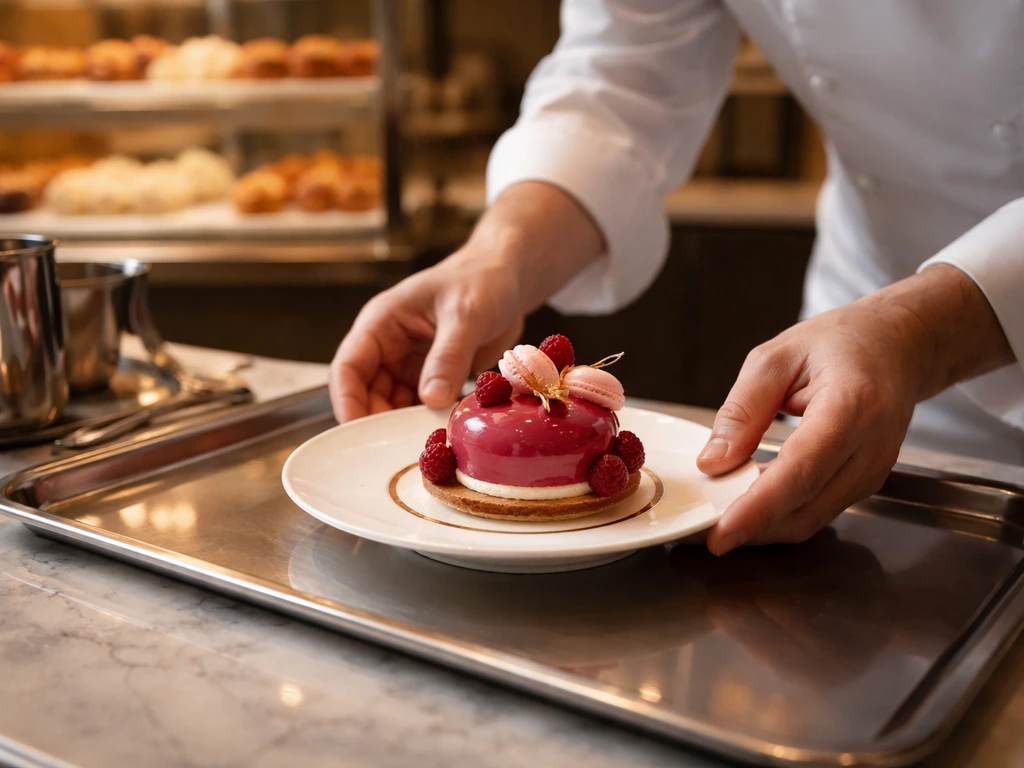
Who François Payard is and why people search his wealth
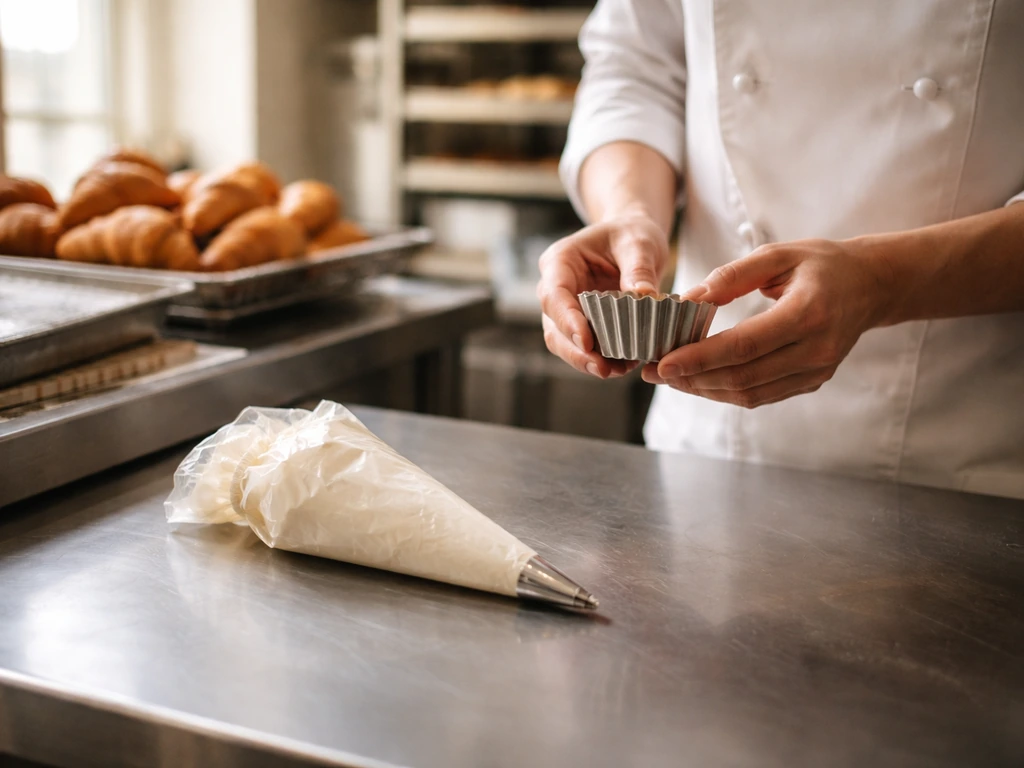
François Payard is a French pastry chef born in Nice on July 16, 1966, who built one of the most recognizable names in American pastry. He comes from a third-generation pastry family, grew up working in his family's patisserie in Nice, and eventually made his way to New York where he became a serious culinary force. He earned 'Pastry Chef of the Year' recognition, authored multiple cookbooks including 'Simply Sensational Desserts,' 'Chocolate Epiphany,' 'Bite Size,' and 'Payard Desserts,' and ran a flagship patisserie on the Upper East Side that became a genuine New York institution.
People search his net worth because he's one of those chefs who crossed over from pure kitchen work into brand building. He had a namesake restaurant, expanded into a bakery chain, wrote books, appeared in media, and kept working through a series of openings, closures, and partnerships that look financially complicated from the outside. That complexity is exactly what makes the number hard to pin down and worth explaining properly.
Quick disambiguation: if you're searching for a François Payard who is a politician, a rugby player, or a businessman in an unrelated industry, this is not the right article. Many readers also ask about François Pienaar net worth, but the name is easy to mix up with other people and this article focuses on François Payard. This covers the pastry chef and restaurateur specifically. The name does not appear to be shared with any other widely searched public figure in a way that creates confusion, so you're almost certainly in the right place.
What 'net worth' actually means here
Net worth, in the way it's used on reference sites like this one, means total assets minus total liabilities. For a chef and restaurateur, that would theoretically include equity in businesses, real estate, savings and investments, intellectual property value (like cookbook royalties and brand licensing), minus any business debts, personal loans, or legal liabilities. In practice, none of that is publicly filed for a private individual like Payard, which means every number you see is an estimate built from observable signals.
Verified net worth figures only exist for publicly traded companies or individuals who have disclosed assets through political filings, bankruptcy proceedings, or court documents. For chefs and restaurateurs, you occasionally get glimpses through bankruptcy filings (and Payard's businesses did pass through legal proceedings, which we'll cover), but that still doesn't give you a clean personal balance sheet. Treat every number in this space as a reasonable approximation, not a certified audit.
Career timeline and the income sources that matter

Payard's career in the U.S. started in the early 1990s at Le Bernardin and then Daniel, where he built his reputation as a serious pastry talent. The flagship came in 1997 when he opened Payard Patisserie and Bistro on the Upper East Side, which ran for over a decade before closing in 2009 due to a rent dispute. That's a 12-year run for a high-profile Manhattan patisserie, which is genuinely impressive and would have generated substantial revenue over that period.
After the 2009 closure, Payard moved into a partnership-driven expansion phase. Observer (Oct 2006) describes InTent as pastry wizard François Payard’s first downtown venture and notes his existing patisserie on the Upper East Side (Payard Bistro) After the 2009 closure. In September 2010 he opened FPB (Francois Payard Bakery) on West Houston Street in collaboration with restaurateur Marlon Abela's MARC group.
That grew to three NYC locations including a Battery Park City outpost and a Columbus Circle spot that opened in June 2012. A second patisserie concept, FP Patisserie, returned him to the Upper East Side in November 2012. By 2016 he had resigned as Executive Pastry Chef from both the bakeries and FP Patisserie [via a notably public Twitter announcement. ](https://ny.
eater. com/2016/8/4/12379628/francois-payard-resigns-bakery) All three NYC bakeries closed in January 2018, with MARC confirming the shutdowns.
After 2018, Payard kept working. He partnered with the French brasserie concept Karver in early 2018, and later moved into new restaurant work including involvement with Southold Social on Long Island's North Fork. His career continued to generate income through consulting, culinary direction, and brand activity even without a flagship restaurant of his own.
| Period | Key Milestone | Income Type |
|---|---|---|
| Early 1990s | Le Bernardin and Daniel (NYC) | Salary, reputation building |
| 1997 | Opens Payard Patisserie and Bistro, Upper East Side | Restaurant ownership/operations |
| Late 1990s–2000s | Cookbook releases, media appearances, awards | Royalties, speaking/media fees |
| 2006 | InTent downtown venture | Partnership/consulting income |
| 2009 | Flagship closes due to rent dispute | Revenue ends on flagship |
| 2010–2012 | FPB bakery chain launches (3 NYC locations, MARC partnership) | Salary/equity in partner-led operation |
| 2012 | FP Patisserie reopens on Upper East Side | Operations income |
| 2016 | Resigns as Executive Pastry Chef | Exit from operational role |
| 2018 | All NYC bakeries close; Karver partnership announced | New consulting/partnership income |
| 2020–2026 | Southold Social and ongoing consulting/brand work | Consulting, brand licensing, media |
Current net worth estimate and the logic behind it
As of June 2026, the most reasonable estimate for François Payard's net worth is approximately $5 million, with a plausible range of $3 million to $7 million. The $5 million figure comes from sites like Celebrity Birthdays (last updated December 2023), which is not a rigorous source but is consistent with what you'd expect given his career arc. This estimate is often compared to other sources when people look up François Payard net worth $5 million figure. The PeopleAI figure of roughly $679,000 based on social media metrics should be dismissed outright as a methodology problem, not a data point.
Here's the logic for landing in the $3 to $7 million range rather than higher or lower. On the upside: a 12-year flagship restaurant in Manhattan, multiple cookbook deals, ongoing brand activity, and years of consulting fees add up meaningfully. On the downside: the MARC partnership structure meant Payard was likely earning as an executive and culinary director rather than holding equity in the FPB locations.
The 2018 closure of all three NYC bakeries, combined with the bankruptcy-adjacent PBS Foods LLC proceedings noted in Second Circuit court records, suggests the later expansion didn't end cleanly for the corporate structure around his name. Personal net worth and corporate net worth are different things, but messy closures rarely leave the named principal better off.
Cookbook royalties and brand licensing are real but modest at his output level. Four major cookbook releases over a career generate ongoing but not transformative passive income unless one becomes a recurring bestseller. His 'Simply Sensational Desserts' was well-received but is not in the 'Joy of Cooking' tier of perpetual royalty income. The more meaningful ongoing assets are likely his reputation and consulting value, which are hard to monetize on a balance sheet but keep generating income.
Wealth signals: restaurants, brand licensing, TV, and partnerships
Restaurant ownership is the most obvious wealth signal for a chef, but it's also the most misleading one. Restaurants are notoriously capital-intensive and thin-margin. Payard's 1997 patisserie running for 12 years is a real wealth-building event, but only if the ownership structure was favorable. His later FPB expansion was explicitly a partnership with MARC, which likely meant he received compensation rather than built equity he could later sell. When MARC shuttered those locations in 2018, Payard's exit from the corporate structure had already happened in 2016, so he was probably not directly on the hook for closure costs.
Baking brand licensing is a growing area for pastry chefs, and Payard's name has real recognition in that space. There's no public record of a major licensing deal (a supermarket product line, a baking kit brand) that would dramatically inflate his net worth, but smaller arrangements for branded products or culinary consulting to food companies are plausible and consistent with his profile.
TV and media have been modest contributors rather than major ones. Payard has appeared in food media and was profiled on ABC News Nightline, but he's not a Food Network regular in the way that would generate appearance fees at the level of, say, a Bobby Flay or Giada De Laurentiis. Media income for chefs at his profile level is more about maintaining visibility than generating primary income.
Partnerships like the Karver collaboration and the Southold Social work are the kind of ongoing revenue that keeps a chef's income stream alive after flagship closures. These don't typically produce equity windfalls, but they do represent steady consulting and culinary direction fees that can run $100,000 to $300,000 annually for a chef of his reputation.
How Payard's wealth compares to other celebrity chefs
Context matters here. When you look at the celebrity chef wealth spectrum, it runs from nine figures (Gordon Ramsay at roughly $220 million, Nobu Matsuhisa at over $200 million) down through the $20 to $50 million range for chefs who built genuine restaurant empires with franchising or major media careers, and then into the $5 to $15 million range for highly respected chefs who built strong regional or national reputations without hitting the mainstream TV or franchise jackpot.
Payard fits comfortably in that third tier. He's not a television personality at the scale that creates media wealth, and his restaurant model was premium patisserie rather than a scalable fast-casual or franchise concept. That's a respectable but inherently limited wealth-building engine. Compare that to a chef like Daniel Boulud, who built a true multi-restaurant group, or Thomas Keller, whose brand extends to products, consulting, and real estate. Payard's wealth signals are more modest, which is why the $5 million estimate feels right rather than $50 million.
Within the broader 'François' name category on this site, it's worth noting that wealth varies enormously across professions. Business figures like François Perrodo built wealth through entirely different mechanisms (oil and energy, where the scale is an order of magnitude larger) while figures from entertainment or culinary backgrounds tend to cluster in ranges more consistent with what we see for Payard. If you are looking specifically for François Perrodo net worth, the same idea applies: most numbers online are educated estimates rather than audited disclosures. The comparison is useful mainly to illustrate how profession shapes the ceiling.
How accurate are these numbers, and what to check next

To be direct: the $5 million estimate is the most defensible figure available, but it is not verified. No primary source, regulatory filing, or court document publicly confirms Payard's personal net worth at any specific number. The PBS Foods LLC bankruptcy proceedings from 2018 are the closest thing to a public financial document touching his business world, but that's a corporate filing and the court record addresses the entity, not his personal assets.
If you want to validate or update the figure, here's what to actually look for:
- Court records and bankruptcy filings: The Second Circuit case involving PBS Foods LLC is publicly accessible. Corporate filings won't tell you Payard's personal net worth, but they reveal the financial structure of his business entities.
- New restaurant or business announcements: Every new partnership, restaurant opening, or licensing deal is a signal. Major food media (Eater, Grub Street, Tasting Table) cover these when they happen.
- Cookbook sales and publishing deals: New book announcements with major publishers signal continuing brand value. Check Publishers Marketplace or publishers' press releases.
- Business registration filings: New York State business entity filings are publicly searchable and can show when new LLCs are formed under his name or associated entities.
- High-credibility net worth sources: Celebrity Net Worth (celebnetworth.net), TheRichest, and similar established aggregators tend to be more methodologically consistent than one-off AI tools. Cross-reference at least two or three.
The fundamental challenge with estimating a private chef's net worth is that the most important numbers (equity stakes, consulting contracts, royalty rates) are private agreements. Until Payard either takes a company public, runs for office, or ends up in a high-profile legal proceeding that requires asset disclosure, the $3 to $7 million range is likely the best any outside observer can responsibly claim. The $5 million midpoint is a reasonable working figure, and anything dramatically higher or lower would need significant new public information to justify.
FAQ
Why do net worth websites disagree so much on François Payard net worth?
Most sites use different proxies, like social-media “signals,” estimated restaurant revenue, or generic royalty assumptions, then back into a number without knowing ownership percentages, debt levels, or whether the chef personally owned the assets versus being paid a salary or consulting fee.
Does François Payard personally own the businesses behind the Payard name?
Not necessarily. Partnership structures, especially his later bakery expansion with MARC, often mean the principal is compensated for culinary leadership rather than holding equity that would translate directly into personal net worth.
How much of the estimate should come from cookbook royalties versus restaurants?
Cookbook income is usually smaller and slower, unless there is a long-running top-seller or licensing tied to a major distribution deal. For Payard, the larger driver in most reasonable estimates is career-stage cash flow and any equity from favorable ownership early on, not perpetual blockbuster royalties.
Could the $5 million midpoint be wrong in either direction, and what evidence would change it?
It could move up if credible reporting surfaced that Payard retained significant equity stakes or received large settlement or licensing payments. It could move down if filings or reporting showed heavy personal liabilities, guaranteed debts, or that his role was mostly paid-director work with little equity.
What does the PBS Foods LLC bankruptcy information actually tell you about his net worth?
It can hint at business-level financial stress around the corporate entity, but it does not reveal Payard’s personal balance sheet. If he left prior to later shutdowns, he may not be directly responsible, so the link to his personal net worth is indirect.
If he is not a TV star, why would he still have multi-million earnings?
High-end chefs can earn substantial income through consulting, culinary direction, branded menus for partners, and paid appearances that are less frequent but more lucrative than constant television work. The key is that these payments are often private and not easily publicized.
How can I sanity-check an online figure without access to private financials?
Compare the implied wealth to realistic career economics: estimate years of paid roles, typical compensation ranges for executive pastry chefs and consulting work, and then ask whether the number assumes he owned equity in capital-intensive ventures. If a figure assumes large equity without showing ownership evidence, treat it cautiously.
Is François Payard net worth the same as company net worth or brand valuation?
No. Personal net worth refers to his assets minus liabilities, while company or brand value can sit with investors, partners, or separate entities. A chef can be closely associated with a brand while owning only a small portion of it.
Do partnerships like Karver or Southold Social usually create immediate wealth for the chef?
They more often create steady income through consulting or direction fees rather than one-time equity windfalls. Unless the arrangement included an ownership stake, the financial impact is usually ongoing cash flow, not a dramatic increase in personal net worth.
Are there common mistakes in searches for “francois payard net worth” that lead to the wrong person?
Yes. François is a common name, and some results mix Payard with other public figures. Use identifying context like “pastry chef,” “Upper East Side patisserie,” or “FPB” to avoid pulling net worth info for someone unrelated.