
Francois Pienaar's net worth is estimated at around $8 million to $12 million USD as of mid-2026. If you are looking specifically for the latest figure for Francois de Poortere net worth, it helps to compare the most recent estimates against documented income and investment updates. That range reflects documented income streams spanning professional rugby contracts, major brand endorsements, a stake in a £32 million club takeover, media punditry, speaking fees, and ongoing ambassador roles. It is not a precise audited figure, and no public figure's net worth ever truly is, but it is a grounded estimate built from verifiable career milestones rather than guesswork.
Francois Pienaar Net Worth: Estimate, Sources, Timeline

Marcus Holloway
6 Jun 2026
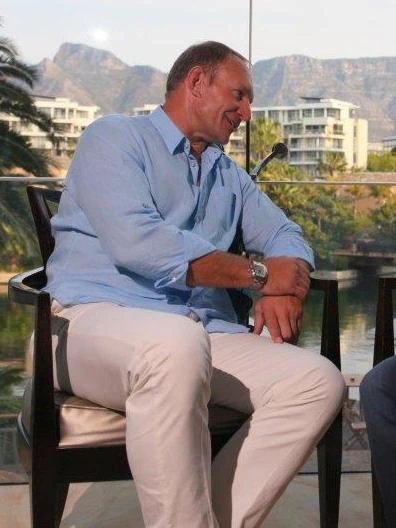
Who Francois Pienaar is
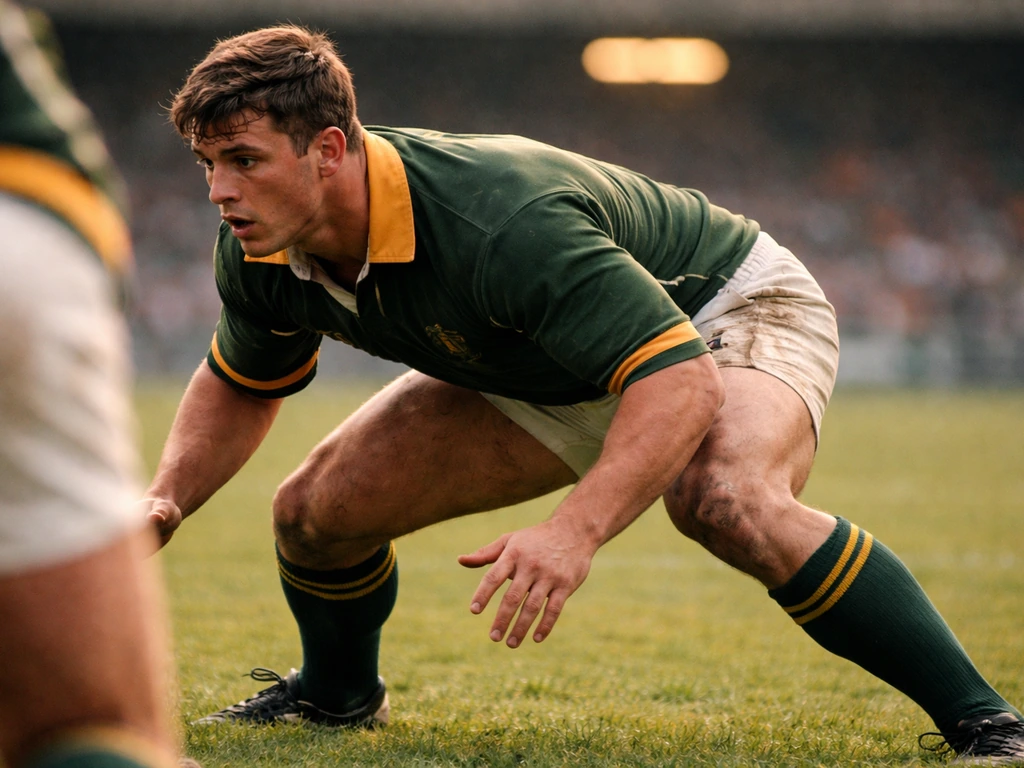
Jacobus Francois Pienaar was born on 2 January 1967 in South Africa and played as a flanker for the Springboks. He is best known for captaining South Africa to victory at the 1995 Rugby World Cup on home soil, lifting the Webb Ellis Cup alongside Nelson Mandela in one of sport's most iconic moments. What makes his record especially striking: he captained South Africa in every single one of the 29 Test matches he played, having been appointed captain for his very first international appearance. That kind of consistent leadership at the highest level is extremely rare.
After his last Test in August 1996, Pienaar moved to English club Saracens, where he eventually became a player-coach, blank" rel="noopener noreferrer">making 44 appearances in that dual role between 2000 and 2002. He was inducted into World Rugby's Hall of Fame and has been voted Rugby Personality of the Year by the UK Rugby Union Writers' Club, as well as Newsmaker of the Year in South Africa. His profile was further cemented internationally when his story was told in the film Invictus, which introduced him to a global audience well beyond rugby. It is worth noting that 'Francois Pienaar' appears in some non-sports publications as a name attributed to finance and investment figures in Africa, so when researching his net worth, it is important to confirm you are looking at the rugby captain, not a coincidental name match.
The net worth snapshot, and what it actually means
The $8 million to $12 million estimate puts Pienaar comfortably in the upper tier of retired rugby professionals, though well below the stratospheric numbers you see for footballers or the highest-earning rugby names of the professional era that followed him. Rugby only turned fully professional in 1995, which is significant: Pienaar played through the transition, meaning his playing contracts were never at the levels that players entering the professional era even five years later would command. His wealth has largely been built post-retirement through smart positioning, not through a single enormous contract.
A net worth figure like this represents an estimated total of assets minus liabilities, not a bank balance. It includes things like the value of any equity stake in Saracens, the accumulated value of endorsement deals, property, savings, and other investments. Because none of these are publicly disclosed in full, any estimate carries uncertainty. The $8 to $12 million range is deliberately a range for that reason.
How this estimate is built, and why different sites disagree

Net worth reference sites, including this one, aggregate information from public records, credible interviews, documented commercial deals, verified media appearances, and speaker agency fee disclosures. For Pienaar specifically, sources include the confirmed £32 million Saracens takeover consortium he was part of (reported by both Sky Sports and BBC Sport), his documented ambassador roles for Guinness and Visa around the 1999 and 2003 Rugby World Cups (noted by CAA Speakers), his ISPS Handa ambassador listing, his work as an ITV Sport pundit across the 2007, 2011, and 2015 World Cups, his commercial speaking engagements listed on agencies like Speakers.co.uk, and his role as Founding Chairman of MAD Charity.
The reason different sites show different numbers is usually one of three things: they are working from different source pools, they are applying different valuation methods to ambiguous income categories (like estimating what an ambassador deal pays without a disclosed contract), or they have not updated their figures in years. Sites that publish a single tidy number without a range are almost always hiding uncertainty behind false precision. The honest approach is a range with documented anchors, which is what this estimate represents.
It is also worth knowing that sites like CelebrityNetWorth, which Wikipedia describes as compiling short biographies with net worth estimates, are not independently verified financial statements. They are useful starting points, but they should be cross-referenced rather than treated as definitive.
Where the money actually came from
Rugby contracts and playing career
Pienaar's Springbok career ran from 1993 to 1996, straddling the amateur-to-professional transition. His early international caps were technically amateur. After rugby went professional in 1995, he signed with Saracens in England, where top players were beginning to earn serious money. While exact contract figures are not publicly disclosed, top English club players in that era were earning in the range of £200,000 to £500,000 annually. His player-coach role at Saracens from 2000 to 2002, covering 44 appearances, would have added to that base.
Endorsements and ambassador roles

This is where Pienaar's post-1995 profile translated directly into income. He was chosen as an ambassador for Guinness and Visa, the headline sponsors of the 1999 and 2003 Rugby World Cups. Major World Cup sponsorship ambassador deals of that era typically involved six-figure retainers plus appearance fees. He has also served as an ambassador for ISPS Handa, an international golf promotion organisation with a significant global ambassador programme. More recently, he was involved in Pilsner Urquell's ambassador programme. Across a two-decade post-retirement period, multiple overlapping ambassador arrangements accumulate meaningfully.
The Saracens investment
One of the most concrete documented wealth events in Pienaar's post-retirement life is his involvement in the £32 million takeover of Saracens Rugby Club. Both Sky Sports and BBC Sport confirmed he was part of the consortium that completed this deal. Equity stakes in sports clubs can appreciate substantially over time, or they can be complex to value if the club's finances fluctuate. Saracens has had a turbulent period including salary cap breaches and relegation, which complicates the valuation of any stake. Still, involvement at the £32 million consortium level is a documented major financial commitment and potential asset.
Media work and speaking
Pienaar worked as a rugby pundit for ITV Sport during the 2007, 2011, and 2015 Rugby World Cups, three separate tournaments over eight years. TV punditry at major World Cup level commands daily fees in the range of £1,000 to £5,000 for prominent former players, across tournament durations of several weeks. He is also commercially booked as a motivational speaker through agencies like Speakers.co.uk, where his fee range is listed as a guide for corporate bookings. High-profile rugby World Cup winners typically command speaker fees in the £10,000 to £30,000 range per engagement.
Charity and leadership roles
Pienaar is the Founding Chairman of MAD Charity (Make A Difference), which he re-branded and has been publicly associated with as a gala event organiser and advocate. Charity roles typically do not generate personal income directly, but they build the kind of brand equity and network connections that support commercial opportunities like speaking and ambassador deals.
Wealth timeline: the key milestones

| Period | Milestone | Wealth Impact |
|---|---|---|
| 1993–1995 | Springbok debut through 1995 World Cup win (amateur/transitional era) | Limited direct playing income; enormous profile-building value |
| 1995–1996 | Professional rugby contracts begin post-union professionalisation | First significant playing salary income |
| 1996–2002 | Joins and plays for Saracens; becomes player-coach | Club salary income; 44 appearances as player-coach |
| 1999–2003 | Ambassador for Guinness and Visa across two Rugby World Cups | Documented six-figure endorsement income period |
| 2000s | ITV Sport punditry begins; speaker circuit launches | Recurring media and speaking fees |
| 2007, 2011, 2015 | ITV Sport Rugby World Cup pundit across three tournaments | Sustained broadcast income over eight-year window |
| Post-2010 | Saracens £32m takeover consortium; ISPS Handa and Pilsner Urquell ambassador roles | Major investment event; ongoing endorsement income |
| Ongoing | MAD Charity Founding Chairman; global speaking engagements | Brand equity and commercial speaker income |
How Pienaar's wealth compares to peers and post-retirement patterns
Pienaar's financial trajectory follows a pattern common among elite athletes who retired just as their sport professionalised: the playing income was real but not enormous by modern standards, and the real wealth-building happened through leveraging their name and networks afterward. Compare this to, say, players who entered professional rugby five to ten years later and commanded multi-million-pound annual contracts from the start. Those players had bigger initial capital to work with, but their post-retirement brand value is often lower because they lack a single iconic moment equivalent to the 1995 World Cup.
Among Springbok captains and World Cup-winning skippers from rugby's professional era, Pienaar sits at the more modest end of net worth estimates, which is expected given the timing of his career. He is not in the same financial bracket as, for example, footballers who captained World Cup-winning sides in the full commercial era of the sport. But his wealth is solidly built and diversified across multiple streams, which is generally a healthier financial position than athletes who concentrated everything in one big contract.
For readers browsing this site's broader coverage of public figures with similar name origins, it is interesting to note the variety of wealth-building paths: Francois Perrodo, for instance, represents inherited and energy-sector wealth at a completely different scale, while other Francois-named figures in entertainment or sport built their fortunes through entirely different mechanisms. Francois Perrodo net worth discussions usually focus on his business and investment background rather than rugby-related income streams. The comparison is a reminder that a name tells you very little about financial scale, and the career context matters enormously.
Is this estimate current, and why do figures vary so much online
Net worth estimates for retired athletes shift over time because their income streams are ongoing. Speaking engagements continue. Ambassador deals renew or end. Investment values change. The Saracens stake, for example, may be worth more or less than when the £32 million takeover was completed, depending on the club's current financial position. This estimate is built from information available as of mid-2026, but it should be treated as a snapshot, not a permanent figure.
The wide variation you see across different net worth websites, sometimes ranging from $5 million to $20 million for the same person, comes down to methodology differences. Some sites estimate based on career earnings alone without accounting for taxes or spending. Some include endorsement income at face value without discounting for duration or exclusivity. Some simply copy older estimates and add a year to the date. Checking when a site last updated its figure, and whether it cites any documented sources, is the fastest way to judge reliability.
If you want to verify or track changes to Pienaar's net worth over time, the most reliable approach is to cross-reference documented events: watch for news of new ambassador deals, commercial partnerships, or club investment changes. For more background, you can also review the current estimates summarized in articles about Francois Poirier net worth. To get a clear view of Francois Payard net worth claims, use the same cross-referencing approach based on documented deals and credible updates rather than one unverified estimate. Each of those events is a real anchor point that moves the estimate in a defensible direction, rather than relying on a single site's compiled figure.
FAQ
How can I be sure I am looking at Francois Pienaar (the rugby captain) and not someone else with the same name?
Use the name plus “Springboks” or “Saracens,” and confirm the specific deal facts you can verify, like his involvement in the Saracens £32 million takeover consortium. If a source cannot tie the claims to the rugby captain’s documented public activities, treat it as a likely name-mix-up.
Why does net worth not match what people assume is his “bank balance”?
An estimate should be treated as a snapshot of assets minus liabilities, not liquid cash. If you want a rough “spendable” view, look for signals of current active income, such as recent ambassador or media work, and assume taxes and living costs reduce what is effectively available day to day.
Does the £32 million Saracens takeover automatically mean his personal net worth is £32 million?
The £32 million figure refers to the scale of the Saracens takeover consortium, but your net worth impact depends on how much capital he personally contributed, what terms he received, and how the stake performed after periods of financial stress. Without disclosure of his exact equity percentage and cost basis, you generally cannot convert that event into a precise personal net worth number.
How do I tell whether a net worth website is using solid methodology or just rounding up a guess?
If you see a single “exact” number without explaining sources or dates, it is usually not more accurate, it is just more confident. A more defensible approach is to prefer ranges, and to check whether the source states when it was last updated and which documented anchors it used.
What parts of his wealth are hardest to estimate, and why do estimates vary so much?
Because his peak playing years fell across the amateur to professional transition, even high-quality estimates can diverge on two items: (1) assumed post-retirement deal value for ambassadors and speaking, and (2) valuation of any club or investment holdings. Those categories are often partially undisclosed, so uncertainty concentrates there.
How often should a credible net worth estimate be updated for someone like Pienaar?
Net worth estimates may lag behind reality because investments and contracts are updated irregularly, especially for non-public roles. A practical check is to look for recent, documentable events (new sponsorship announcements, newly listed speaking fees, or updated media contracts) and then see whether the estimate site updated its date.
Why can two sites disagree even when both seem to use “the same” career facts?
Taxes are a major reason. Many published figures implicitly treat gross income as if it becomes an asset, but net worth should reflect income after tax, plus spending and debt repayment. If you want tighter reasoning, focus on verified asset-building events (club stake changes, major new partnerships) rather than only headline earnings.
How reliable are speaking and media fee estimates in building a net worth number?
For motivational speaking and TV punditry, fees vary by audience, exclusivity, and travel or production requirements, and agency listings are often ranges rather than guarantees. If a site uses one “midpoint” number, it can understate or overstate the real earnings depending on whether he had high-demand years or lighter schedules.
Do his charity and foundation roles meaningfully increase his net worth?
Charity leadership usually does not add to personal net worth directly, but it can indirectly support commercial opportunities by increasing visibility and strengthening networks. A useful way to factor this is as an influence on future paid opportunities, not as a direct asset contribution.
What is the best way to track whether Francois Pienaar’s net worth is rising or falling over time?
The simplest way is to track a timeline of new income-generating anchors: updated ambassador programs, newly reported partnerships, confirmed media appearances, and any publicly referenced investment or club involvement. Then compare how the published estimates change over that same period.